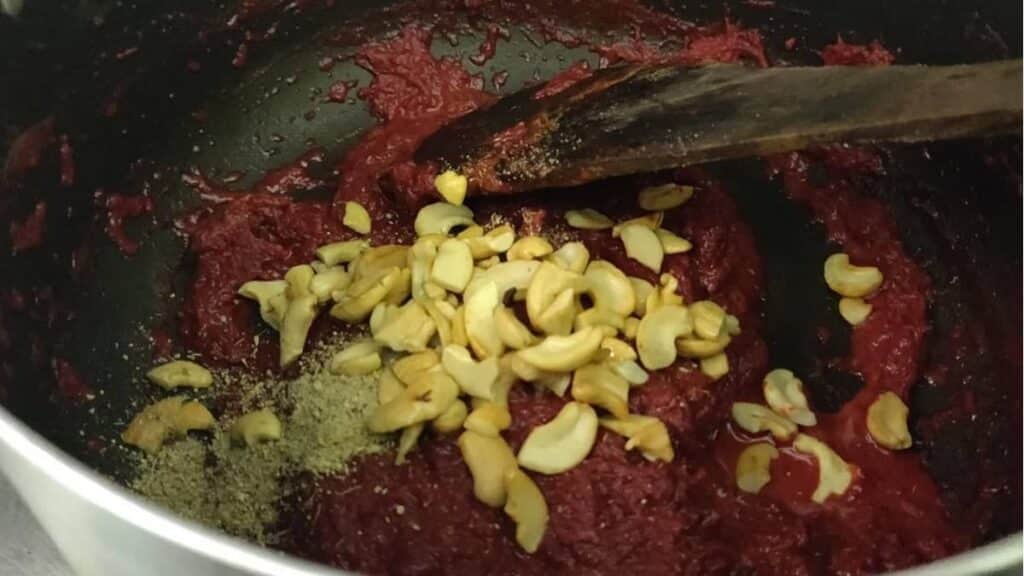
Beetroot Halwa, also known as Chukandar ka Halwa, is a traditional Indian dessert made with grated beets, milk, jaggery, and aromatic spices. This stunning deep-red pudding offers a healthier alternative to the classic Gajar ka Halwa (carrot halwa), combining the natural sweetness of beets with the richness of ghee or coconut oil, cardamom, and nuts to create a creamy, mildly sweet treat that can be enjoyed warm in winter or chilled in summer.
Quick Summary:
Beetroot Halwa is a vegan, gluten-free Indian dessert made by slow-cooking grated beets with milk (or plant-based milk), sweetening with jaggery, and flavoring with cardamom and nuts. This naturally sweet, vibrant red halwa takes 30-40 minutes to prepare and offers a nutritious way to enjoy beets.
Table of Contents
What Is Beetroot Halwa (Chukandar Ka Halwa)?
Beetroot Halwa is a slow-cooked Indian pudding-style dessert featuring grated beets as the star ingredient. “Chukandar” means beetroot in Hindi, making Chukandar ka Halwa the traditional name for this vibrant sweet dish popular across North India.
Unlike the famous orange-colored Gajar ka Halwa (carrot halwa), Beetroot Halwa displays a stunning deep red or magenta hue that makes it visually striking on any dessert table. The natural sweetness of beets means less added sweetener is needed, making this a relatively healthier indulgence.
What Makes Halwa Special in Indian Cuisine:
- Versatile Base: Indian halwa can be made from vegetables (carrots, beets, bottle gourd), fruits (pineapple, apple), grains (semolina, wheat), lentils (moong dal), or flour
- Pudding-Like Texture: Slow cooking creates the characteristic creamy, thick consistency
- Festival Favorite: Served during Diwali, Holi, Raksha Bandhan, Navratri, and other celebrations
- Comfort Food: Made both for special occasions and simply when craving something sweet
Beetroot Halwa vs. Carrot Halwa: Key Differences
While both belong to the halwa family, beetroot and carrot versions offer distinct characteristics that appeal to different preferences.
Color and Visual Appeal
Carrot Halwa (Gajar Ka Halwa):
Bright orange color from natural carrot pigments. Classic, familiar appearance associated with winter celebrations.
Beetroot Halwa (Chukandar Ka Halwa):
Deep red or magenta color from betalain pigments in beets. Visually stunning and unique, often surprising first-time viewers.
Flavor Profile
Carrot Halwa:
Mild, sweet flavor that’s universally appealing. Slightly fibrous texture even when well-cooked.
Beetroot Halwa:
Distinctly sweet with earthy undertones. Sweeter than carrots naturally, requiring less added sugar. Smoother, creamier texture.
Moisture Content
Carrot Halwa:
Tends to be drier and denser. Requires more milk and longer cooking to achieve soft texture.
Beetroot Halwa:
Naturally moister due to beets’ high water content (87% water). Results in creamier consistency with less effort.
Nutritional Differences
Carrot Halwa Benefits:
- High in beta-carotene (Vitamin A)
- Good for eye health
- Rich in antioxidants
Beetroot Halwa Benefits:
- Rich in folate and iron
- Supports blood health and circulation
- Contains betaine for liver health
- Lower in calories than carrots
- Natural nitrates support cardiovascular health

Why Make Beetroot Halwa
Beetroot Halwa offers compelling reasons to add it to your dessert repertoire, from nutritional benefits to practical advantages.
Health and Dietary Benefits
Vegan and Gluten-Free:
When made with plant-based milk (almond, oat, coconut) and coconut oil instead of ghee, this dessert becomes completely vegan while naturally being gluten-free. Perfect for guests with dietary restrictions.
Naturally Sweetened:
Beets contain natural sugars, allowing you to use less jaggery or sweetener compared to other halwa varieties. This makes it a relatively lower-glycemic dessert option.
Nutrient-Dense:
Unlike empty-calorie desserts, beetroot halwa provides vitamins (folate, vitamin C), minerals (iron, manganese, potassium), fiber, and antioxidants.
Visual and Sensory Appeal
Eye-Catching Presentation:
The deep red color creates stunning visual impact that makes this dessert Instagram-worthy and impressive for guests. The vibrant hue signals the presence of beneficial betalain compounds.
Addictively Creamy:
Properly cooked beetroot halwa achieves a silky, creamy texture that’s neither too dry nor too liquid. Mildly sweet rather than cloying, it satisfies sweet cravings without overwhelming.
Aromatic Delight:
Cardamom’s warm, sweet fragrance combined with toasted nuts creates an irresistible aroma that fills the kitchen during preparation.
Practical Advantages
Convert Beet Skeptics:
Many people, especially children, resist eating beets due to their earthy flavor. Transforming them into a sweet, creamy dessert introduces beets in an appealing form that can change minds.
Year-Round Availability:
Unlike some seasonal fruits and vegetables, beets are available throughout the year, making this recipe feasible whenever you want to prepare it.
Impressive Yet Simple:
Despite its elegant appearance and complex flavor, beetroot halwa requires only basic cooking skills and readily available ingredients.
Beetroot Halwa Ingredients
The beauty of this recipe lies in its simplicity, requiring just a handful of wholesome ingredients that work together to create a harmonious dessert.
Main Ingredients
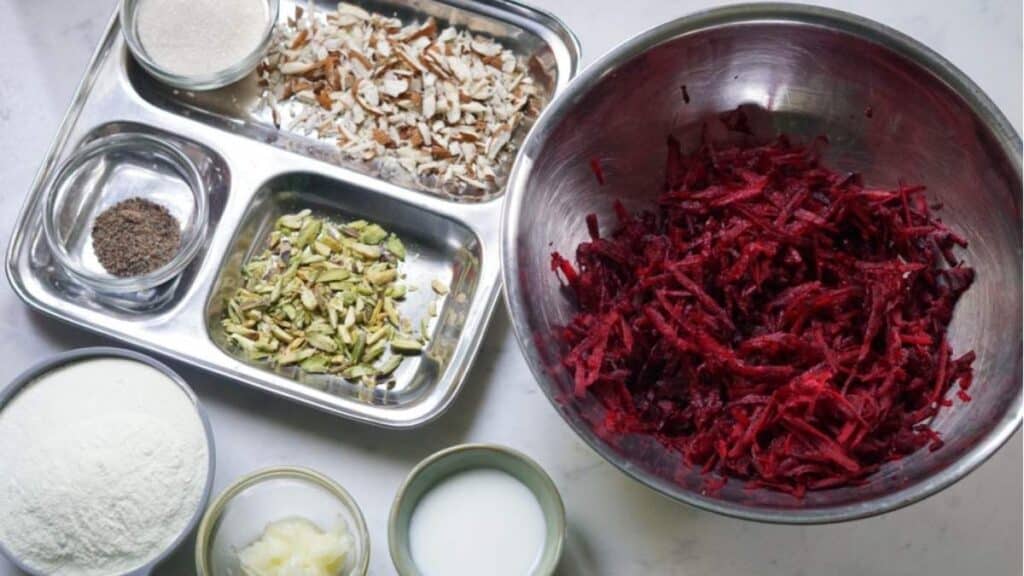
Fresh Beetroot: 2-3 medium beets (about 500g grated)
Choose firm, hard beets without soft spots or blemishes. Organic beets tend to have more concentrated flavor. The natural sugars in fresh beets provide inherent sweetness to the halwa.
Preparation Tip:
Wash thoroughly, peel using a vegetable peeler, and grate using the medium-sized holes on a box grater or food processor. Medium-thick grating ensures proper texture—not too fine (which makes halwa mushy) nor too coarse (which won’t cook evenly).
Milk: 2-3 cups
Traditional recipes use full-fat dairy milk for richness. For vegan versions, substitute with:
- Almond milk (adds nutty flavor)
- Oat milk (creamy and neutral)
- Coconut milk (adds tropical sweetness)
- Cashew milk (ultra-creamy texture)
Fat: 3-4 tablespoons
Ghee (clarified butter): Traditional choice providing authentic flavor and richness
Vegan alternatives: Coconut oil (adds subtle coconut flavor), vegan ghee, or neutral vegetable oil
Sweetener
Jaggery: 1/2 to 3/4 cup
Jaggery (unrefined cane sugar) provides complex sweetness with molasses notes and trace minerals. Available forms:
- Jaggery powder (easiest to incorporate)
- Grated jaggery (dissolves quickly)
- Jaggery syrup (pre-dissolved)
Adjustment: Start with 1/2 cup, taste, and add more if desired. Beets’ natural sweetness varies.
Alternatives: Coconut sugar, date syrup, maple syrup, or organic cane sugar (though these change the traditional flavor profile).
Flavor Enhancers
Cardamom Powder: 1/2 to 1 teaspoon
Freshly ground cardamom provides the best aroma. This warming spice is essential to authentic Indian halwa flavor.
Nuts: 1/4 cup total
Traditional mix includes:
- Cashews: Provide buttery richness
- Almonds: Add crunch and nutrition
- Pistachios: Offer vibrant green color contrast and unique flavor
Preparation: Roughly chop nuts before frying for better distribution and visual appeal.
Optional Additions
Almond Flour: 2-3 tablespoons
Helps bind the halwa and creates thicker consistency. Also adds protein and healthy fats. Can substitute with cashew flour.
Pinch of Salt:
Enhances sweetness and balances flavors (the “sweet-salt” principle in desserts).
Saffron Strands: 8-10 strands
Soaked in warm milk, saffron adds luxury, golden highlights, and distinctive aroma (though this is an indulgent addition).
How to Make Beetroot Halwa: Step-by-Step
Follow these detailed instructions to create perfectly creamy, flavorful Beetroot Halwa every time.
Step 1: Prepare the Beets
Proper beet preparation is crucial for achieving the right texture and cooking time.
Process:
- Wash beets thoroughly under running water to remove any dirt
- Peel using a vegetable peeler (wear gloves to avoid staining hands)
- Grate using the medium-sized holes on a box grater or food processor
- Set grated beets aside in a bowl
Why Grating Size Matters:
Medium-thick grating (about 2-3mm) provides the ideal surface area for absorbing milk while maintaining some texture. Too fine creates mushy halwa; too coarse results in undercooked pieces.
Time-Saving Tip:
A food processor with grating attachment makes this step significantly faster and easier, especially when making large batches.
Step 2: Fry the Nuts
Toasting nuts in ghee or oil enhances their flavor and creates textural contrast in the finished halwa.
Process:
- Heat 2 tablespoons ghee or coconut oil in a heavy-bottomed pan (kadhai) over medium heat
- Add chopped cashews, almonds, and pistachios
- Fry, stirring constantly, for 2-3 minutes until nuts turn light golden
- Remove nuts immediately and transfer to a plate
- Keep nuts aside for later garnish
Important Notes:
- Nuts burn quickly—watch carefully and stir constantly
- Remove from heat as soon as they’re light golden (they continue cooking from residual heat)
- Setting nuts aside prevents them from burning during the long halwa cooking process
Step 3: Roast the Grated Beets
This crucial step removes the earthy, raw flavor of beets and enhances their natural sweetness.
Process:
- In the same pan with remaining ghee/oil, add all the grated beets
- Sauté on medium flame for 4-5 minutes, stirring occasionally
- Beets will release moisture and soften
- Continue until the raw earthy smell is replaced by a sweet aroma
- The color will deepen and intensify during this process
Why This Step Matters:
Roasting the beets caramelizes their natural sugars, removes the raw vegetable smell, and creates a foundation of concentrated flavor. Skipping this step results in a less flavorful halwa with an earthy taste that some find off-putting.
Step 4: Add Milk and Cook
This is where the halwa’s creamy texture develops through patient, slow cooking.
Process:
- Pour 2-3 cups milk into the pan with roasted beets
- Stir well to combine
- Bring the mixture to a boil over medium-high heat
- Once boiling, reduce heat to medium-low
- Cook for 10-12 minutes, stirring at regular intervals (every 2-3 minutes)
- The milk should reduce by 75-80%, becoming thick and creamy
- Beets will absorb the milk and soften completely
Key Points:
- Don’t rush this step—the slow cooking is essential
- Stirring prevents milk from scorching on the bottom
- The mixture will gradually thicken and reduce in volume
- If milk reduces too quickly, lower the heat slightly
Troubleshooting:
If the mixture seems too dry before beets are fully soft, add 1/4 cup more milk and continue cooking.
Step 5: Add Sweetener and Spices
Now the halwa comes together with sweetness and aromatic flavors.
Process:
- Add jaggery powder (start with 1/2 cup)
- Add cardamom powder (1/2 to 1 teaspoon)
- Add a small pinch of salt
- Mix thoroughly to incorporate all ingredients
- Continue cooking on low-medium heat, stirring frequently
- Cook until the halwa thickens considerably
- The mixture should turn glossy and start leaving the sides of the pan
- Test readiness: the halwa should not stick to the pan when stirred
- Taste and adjust sweetness if needed
Cooking Time:
This final cooking phase takes approximately 8-10 minutes. The halwa is ready when it pulls away from the pan sides and achieves a thick, pudding-like consistency.
Step 6: Add Optional Almond Flour (If Using)
For those who prefer thicker, more bound halwa, almond flour helps achieve that consistency.
Process:
- Once the halwa has thickened, add 2-3 tablespoons almond flour
- Mix well to avoid lumps
- Cook for another 2-3 minutes, stirring constantly
- The almond flour absorbs remaining moisture and creates a firmer texture
When to Skip:
If your halwa has already reached your desired consistency without almond flour, you can omit this step entirely.

Health Benefits of Beetroot Halwa
Beyond its delicious flavor, beetroot halwa offers numerous nutritional advantages that make it a relatively guilt-free indulgence.
Nutritional Profile of Beets
Vitamins and Minerals:
- Folate (Vitamin B9): Essential for cell growth, especially important during pregnancy
- Iron: Supports hemoglobin production and prevents anemia
- Potassium: Regulates blood pressure and supports heart health
- Manganese: Supports bone health and metabolism
- Vitamin C: Boosts immunity and aids iron absorption
Beneficial Compounds:
- Betalains: Antioxidant and anti-inflammatory pigments responsible for beets’ deep red color
- Dietary Nitrates: Convert to nitric oxide in the body, supporting cardiovascular health
- Betaine: Supports liver function and reduces inflammation
Healthier Preparation Choices
Reducing Calories:
- Use low-fat milk or plant-based milk alternatives
- Reduce ghee/oil from 4 tablespoons to 2 tablespoons
- Use minimal sweetener, relying on beets’ natural sugars
Vegan Nutrition:
- Plant-based milks add calcium (if fortified) without animal products
- Nuts provide protein and healthy fats
- Coconut oil offers medium-chain triglycerides (MCTs)
Variations of Beetroot Halwa
Experiment with these creative variations to discover new flavor dimensions while maintaining the essential character of this traditional dessert.
Dairy-Free and Vegan Versions
Coconut Milk Version:
Replace dairy milk entirely with full-fat coconut milk for ultra-creamy, tropical-flavored halwa. The coconut complements beets beautifully.
Almond Milk Version:
Use unsweetened almond milk for a lighter, nutty version. May need slightly more almond flour to achieve proper thickness.
Cashew Cream Version:
Blend 1/2 cup raw cashews with 1.5 cups water to create cashew cream. Use this instead of regular milk for incredibly rich, creamy halwa.
Flavor Variations
Rose Beetroot Halwa:
Add 1-2 teaspoons rose water and 2 tablespoons dried rose petals during the final cooking stage. Garnish with additional rose petals and pistachios.
Chocolate Beetroot Halwa:
Add 2-3 tablespoons cocoa powder along with jaggery. The earthy chocolate complements beets’ earthiness while creating a unique fusion dessert.
Orange Beetroot Halwa:
Add 1 teaspoon orange zest and 2 tablespoons fresh orange juice. The citrus brightens the earthy beet flavor.
Spiced Beetroot Halwa:
Include 1/4 teaspoon cinnamon, 1/8 teaspoon nutmeg, and 2-3 cloves (removed before serving) for warming, chai-spiced flavor.