


When Kohrra Season 1 premiered, it shattered the picture-perfect Punjab of Bollywood fantasies and replaced it with something far more real and far more disturbing. Season 2, now streaming on Netflix, goes even darker. Mona Singh and Barun Sobti return to investigate the murder of an NRI social media influencer, but what unfolds is not just a whodunnit
Quick Review
Kohrra Season 2 (Netflix, 2026) is a Punjabi/Hindi crime thriller starring Mona Singh and Barun Sobti investigating the murder of an NRI influencer.
Table of Contents
What Is Kohrra Season 2 About? Plot Summary
Kohrra Season 2 shifts the fog to a darker, more industrial corner of Punjab as detectives Dhanwant Kaur (Mona Singh) and Garundi (Barun Sobti) investigate the brutal murder of Preet Bajwa, an NRI social media influencer who returned to India seeking a divorce from her husband and reconnection with her family. What begins as a straightforward murder investigation quickly unravels into something far more complex and disturbing.
The case exposes layers of societal rot that have nothing to do with the murder itself but everything to do with why the murder happened. Industrial exploitation of migrant workers from Jharkhand, UP, and Bihar. Bonded labor hidden in plain sight within Punjab’s manufacturing belts. Patriarchy so deeply embedded that even the victims defend their abusers. Alcoholism, workplace gender dynamics, Stockholm syndrome, and the crushing cycle of poverty that traps entire communities with no escape.
COMPLETE SHOW OVERVIEW
| Series Name | Kohrra: Season 2 |
| Release Date | February 11, 2026 |
| Genre | Crime Thriller, Social Drama, Mystery, Investigative Procedural |
| Language | Punjabi, Hindi, English, Telugu, Tamil |
| Age Rating | 16+ / TV-MA |
| Lead Cast | Mona Singh, Barun Sobti, Rannvijay Singh, Prayark Mehta |
| Creator | Sudip Sharma |
| Director | Sudip Sharma, Faisal Rahman |
| Writers | Sudip Sharma, Gunjit Chopra, Diggi Sisodia |
| Format | Limited Series (Season 2) |
| Episode Count | 6 episodes |
| Episode Length | 45 minutes per episode |
| Total Runtime | Approx. 4 hours 30 minutes |
| Streaming Platform | Netflix |
| Country of Origin | India |
| Setting | Punjab, India |
| Content Advisories | Graphic violence, murder investigation |
| Best For | Fans of dark crime dramas, social commentary thrillers, layered storytelling, viewers who enjoyed Season 1, audiences who appreciate Delhi Crime, Paatal Lok, Sacred Games |
CHECK MORE ON:Karikaada Movie Review
Genre and Tone: A Crime Thriller That Becomes a Social Autopsy
Kohrra Season 2 operates in multiple genres simultaneously, each reinforcing the others to create something tonally and narratively complex.
Crime Thriller is the surface genre. There is a murder. There are suspects. There are clues, interrogations, and the slow methodical work of piecing together what happened on the night Preet Bajwa died. The procedural elements are handled with precision — this is not a show that relies on convenient coincidences or lazy reveals. The investigation feels grounded, deliberate, and believable.
Mystery operates on two levels. On the surface, it is the mystery of who killed Preet Bajwa. On a deeper level, it is the mystery of how a society becomes this broken, how systemic evil becomes so normalized that people stop fighting it, and how the powerful remain untouchable while the vulnerable disappear without consequence.
Psychological Thriller elements emerge in the character work. Dhanwant Kaur is dealing with personal tragedy while maintaining professional composure. Garundi carries baggage from Season 1 while trying to mature beyond his impulsive instincts. The emotional and psychological toll of doing this work in this environment is palpable in every scene.
Age Rating and Content Advisories: Why This Is Rated 16+/TV-MA
Kohrra Season 2 carries a 16+/TV-MA rating, and it earns that rating through its unflinching examination of violence, exploitation, and systemic abuse. This is not family-friendly viewing. This is mature, often disturbing television designed for adults who can handle difficult subject matter.
Content advisories include:
Graphic violence related to the murder investigation — crime scene imagery, discussions of violent death, and the physical aftermath of brutality. The show does not glorify violence, but it does not shy away from depicting it honestly either.
Mature themes around patriarchy, Stockholm syndrome, and cycles of abuse appear throughout the season. Women defending the men who harm them. Systems that protect abusers while blaming victims. These dynamics are shown with nuance and complexity, but they are difficult to watch.
Languages and Accessibility: A True Pan-India Crime Drama
Kohrra Season 2 is available in five languages on Netflix: Punjabi (original), Hindi, English, Telugu, and Tamil. This multi-language release reflects Netflix’s strategy of making premium Indian content accessible across linguistic and geographic boundaries.
The English audio option is particularly important for second-generation diaspora viewers who may understand Punjabi or Hindi when spoken but struggle with reading subtitles quickly enough to follow complex dialogue. Crime thrillers depend on understanding nuance, subtext, and the precise meaning of interrogations and testimonies — poor subtitle timing or English dubbing allows non-native speakers to fully engage with the material.
The Punjabi original soundtrack carries specific regional texture and authenticity that dubbed versions cannot fully replicate. For viewers who speak Punjabi, watching in the original language offers an experience closer to the creators’ vision. The dialogue is rooted in Punjabi idioms, speech patterns, and cultural references that feel lived-in rather than scripted.
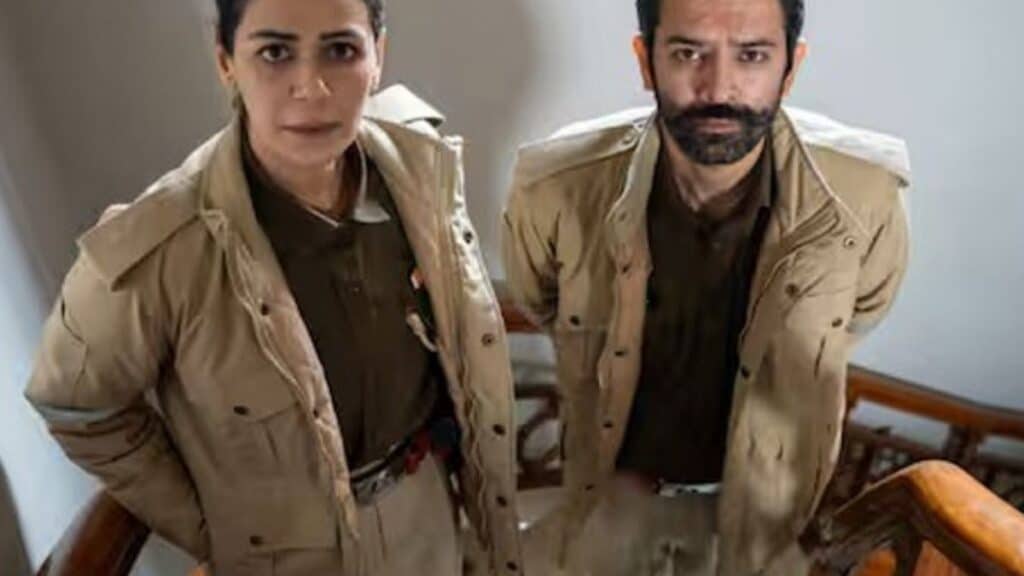
The Cast: Mona Singh Delivers a Career-Best Performance
The success of any crime drama hinges on whether the audience believes in the detectives at its center. Kohrra Season 2 casts brilliantly, with performances that anchor the show’s emotional and investigative weight.
Mona Singh as Dhanwant Kaur
Mona Singh delivers what may be the finest performance of her career as Dhanwant Kaur, a detective caught between personal tragedy and professional obligation. Her portrayal is quiet, restrained, and explosive in equal measure — she plays a woman who has learned to compartmentalize grief in order to function, but the grief is always present, always threatening to break through the surface.
What makes Singh’s performance remarkable is her refusal to play Dhanwant as either victim or hero. She is simply a woman doing incredibly difficult work while carrying unbearable personal pain. The show allows her to be vulnerable without being weak, professional without being cold, and emotionally present without being performative. In a genre that often reduces female characters to archetypes, Singh creates a fully realized human being.
Barun Sobti as Garundi
Barun Sobti returns as Garundi, carrying the emotional baggage of Season 1 while demonstrating a maturity that suggests growth without erasing his fundamental character. Where Season 1’s Garundi was impulsive and emotionally reactive, Season 2’s Garundi has learned when to hold back, when to push, and when to simply listen.
Rannvijay Singh and the Supporting Cast
Rannvijay Singh and the ensemble cast populate Punjab with characters who feel real rather than written. Every suspect, every witness, every victim’s family member brings their own history, their own grief, their own complicity in the systems the show is examining. The writing gives every character depth, and the performances honor that depth with authenticity.
Direction and Writing: Sudip Sharma Dodges the Sequel Curse
Creating a successful second season of a beloved crime drama is notoriously difficult. Audiences expect the same quality that made them love the first season while demanding enough evolution to justify the sequel’s existence. Kohrra Season 2, under the direction of Sudip Sharma and Faisal Rahman, and written by Sharma, Gunjit Chopra, and Diggi Sisodia, threads that needle beautifully.
The show maintains the exact tone of Season 1 — dark, gritty, unsentimental, and relentlessly focused on systemic rather than individual evil. But it expands the world significantly. Where Season 1 focused primarily on the investigation itself, Season 2 uses the investigation as a vehicle to explore industrial exploitation, migrant labor abuse, and regional power dynamics on a much larger canvas.
The non-linear storytelling — each episode begins with a flashback that gradually reveals a character’s backstory — requires attention and patience. Some viewers may find it disorienting initially, but the structure serves a purpose: it forces you to see every character as a product of their history, their trauma, and the systems that shaped them.
Punjab as a Character: Deconstructing the Yash Chopra Fantasy
There are no vibrant mustard fields here. No women in colorful chunnis running through golden landscapes. No dhol beats in the background signaling celebration and abundance. Instead, we see the grey smoke of industrial chimneys. The rusted gates of manufacturing godowns. The suffocating density of labor camps where migrant workers live in conditions designed to keep them trapped. The darkness of rural areas where power is concentrated in the hands of a few and justice is a luxury the poor cannot afford.
The cinematography reinforces this thematic focus. The show is shot in muted colors, with natural lighting that emphasizes shadows, fog, and the grey industrial haze that hangs over much of the setting. Punjab is rendered as claustrophobic rather than expansive, oppressive rather than liberating.
Themes: Systemic Evil and the People Too Tired to Fight It
Industrial exploitation of migrant workers is one of the show’s central themes. The arc involving Prayark Mehta’s character — a boy from Jharkhand searching for his father who disappeared two decades ago — exposes the reality of bonded labor, exploitative working conditions, and the complete absence of accountability when workers from other states go missing in Punjab’s industrial belts.
Regional power dynamics and prejudice are examined unflinchingly. The show depicts the casual prejudice that Punjabis often express toward migrants from UP, Bihar, and Jharkhand, and the structural barriers that prevent those migrants from accessing justice or even basic dignity. This is not a comfortable theme for Indian audiences to confront, but it is an essential one.
Patriarchy and its internalization appear in multiple forms throughout the season. Women defending the men who abuse them. Daughters-in-law protecting the families that exploit them. The show understands that patriarchy is not just imposed from above — it is internalized, reproduced, and defended even by those it harms most.
Cycles of poverty and violence are shown as self-perpetuating. Children grow up in environments where violence is normalized, where exploitation is expected, where fighting back is futile. They become adults who reproduce those same patterns because they have never seen an alternative.
What Works: Layered Storytelling and Unflinching Honesty
Kohrra Season 2 succeeds on multiple levels, but several elements stand out as exceptional.
The writing respects the audience’s intelligence. The show does not explain every theme, does not spell out every connection, and trusts viewers to pick up on the social commentary embedded in every subplot. That level of respect for the audience is rare and deeply appreciated.
The performances are uniformly excellent. Mona Singh and Barun Sobti anchor the show with career-defining work, but every member of the ensemble brings authenticity and depth to their roles. There are no weak links in the cast.
The social commentary feels urgent and relevant. The show is not discussing abstract issues. It is highlighting problems that exist right now — industrial exploitation, migrant worker abuse, systemic corruption — and it does so with unflinching honesty. This is not poverty tourism or trauma porn. It is a deliberate examination of how power operates and who it crushes.
The pacing is deliberate and earned. At 45 minutes per episode across 6 episodes, the show takes its time establishing character, building tension, and allowing emotional beats to land. Nothing feels rushed. Nothing feels padded. The runtime is exactly what the story needs.
What Doesn’t Work: The Challenge of Detailed Storytelling
The only significant criticism that can be leveled at Kohrra Season 2 is one that emerges from its greatest strength: the commitment to giving every character a detailed, fully realized backstory.
There are many characters in the show — suspects, witnesses, victims’ families, migrant workers, industrial owners, police colleagues — and every single one has a history, a motivation, and a role in the larger thematic tapestry. For some viewers, keeping track of all these characters and their interconnected stories may feel overwhelming, particularly given the non-linear structure that jumps between timelines.
Where to Watch and How to Prepare
Kohrra Season 2 is streaming exclusively on Netflix in Punjabi, Hindi, English, Telugu, and Tamil. All 6 episodes (approximately 4.5 hours total) are available to watch now.
How to prepare for the best viewing experience:
Watch in a single sitting or across 2-3 focused sessions rather than spreading it over weeks. The narrative threads are complex enough that long gaps between episodes make it harder to track character connections and thematic development.
Do I need to watch Kohrra Season 1 before Season 2?
While Season 2 features the same lead detectives (Mona Singh and Barun Sobti), it investigates a completely new case with new characters.
What languages is Kohrra Season 2 available in?
The show is available in five languages on Netflix: Punjabi (original), Hindi, English, Telugu, and Tamil. You can switch between audio tracks and add subtitles as needed.
How many episodes are in Kohrra Season 2?
Season 2 consists of 6 episodes, each approximately 45 minutes long, for a total runtime of about 4 hours and 30 minutes.
