


In this Lagnacha Shot movie review, we explore a film that arrives like a breath of fresh air in Marathi cinema’s romantic comedy landscape. When was the last time you watched a love story that didn’t take itself too seriously, that understood the joy of pure escapism, and that trusted its audience to simply enjoy the ride? Lagnacha Shot (meaning “Wedding Shot”) doesn’t pretend to reinvent cinema—it does something arguably more valuable: it delivers exactly what it promises with infectious energy and genuine heart.
Director Akshay Gore makes his directorial debut with the confidence of someone who’s studied the romantic comedy playbook and decided to add his own whimsical footnotes. This is Priyadarshini Indalkar’s most spirited, commanding performance yet, supported by Abhijit Amkar’s earnest charm and an ensemble that understands the delicate balance between absurdity and authenticity. With its clever climactic twist and that delightful Dilwale Dulhania Le Jayenge-inspired train sequence, Lagnacha Shot is the cinematic equivalent of that perfect dessert after a heavy meal—light, sweet, and surprisingly satisfying.
Quick Takeaway:
Lagnacha Shot is a breezy, self-aware romantic comedy that succeeds brilliantly as lighthearted entertainment while delivering genuine emotional moments. Though the premise requires generous suspension of disbelief and the second half loses some of the first half’s crackling energy, the film’s whimsical charm, Priyadarshini Indalkar’s powerhouse performance, and that ingenious final twist make it essential viewing for anyone craving feel-good Marathi cinema. It’s “timepass” done right—with heart, humor, and just enough substance to linger in your memory.
Language: Marathi
Age Rating: UA
Genre: Romantic Comedy, Feel-Good Entertainment
Director: Akshay Gore
Production: Mahaparv Films and Jija Film Company
The Plot: Love Wrapped in Wedding Chaos
At its core, Lagnacha Shot is a runaway romance—but calling it just that would be like calling Maharashtra “some state.” The film’s genius lies in its understanding that modern arranged marriages create their own unique brand of chaos, and sometimes the best love stories begin with pure panic.
Abhi (Abhijit Amkar) is a Bangalore-based professional who gets the shock of his life: he’s being married off tomorrow to his father’s friend’s daughter. Unable to muster the courage for direct confrontation but unwilling to surrender his autonomy, he chooses the path of least resistance—running away from his own wedding in full groom regalia.
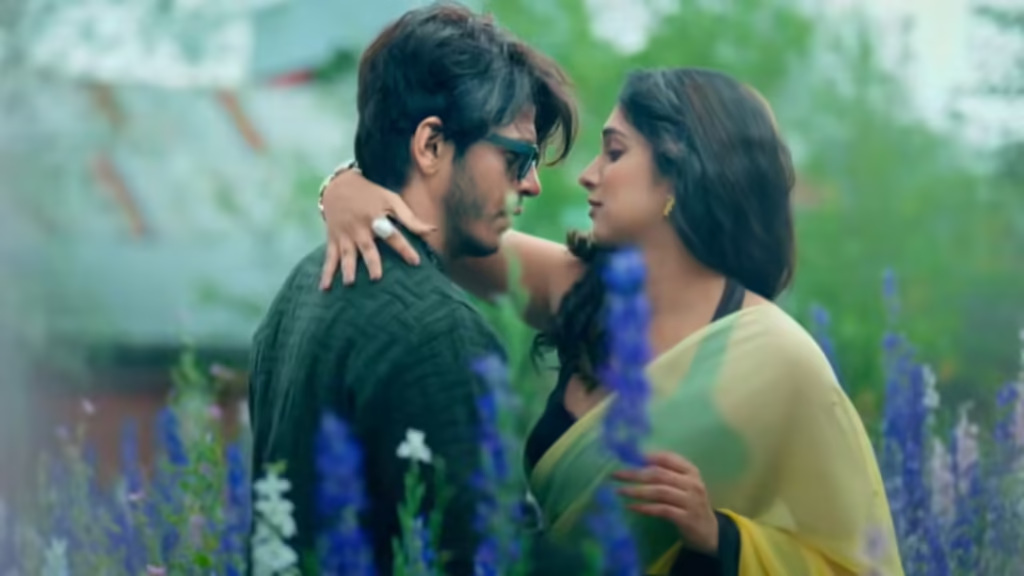
His impromptu escape takes an unexpected turn when he encounters Krutika (Priyadarshini Indalkar) at the railway station—a bride in complete wedding attire who chases his departing train in classic DDLJ fashion. Their first interaction is pure fireworks: she berates him for not helping her board, he’s confused by her aggression, and fellow passengers become unwitting spectators to their spat about male ego and modern chivalry.
What follows is a journey through Maharashtra that’s part road movie, part romantic awakening, and entirely entertaining. Both runaways find themselves without money, phones, or even a change of clothes—just their wedding outfits and growing chemistry. From Mumbai to a mysterious 70-kilometer trek to Alibag (achieved through what can only be described as “movie magic”), they navigate nosy ticket checkers, suspicious cops, and their own conflicting feelings.
The narrative’s central mystery—who is Krutika really, and is she actually the bride Abhi ran away from?—propels the story toward a revelation that recontextualizes everything with delightful cleverness.
Performances: Everyone Shines in Their Moment
Priyadarshini Indalkar: A Star-Making Performance
This Lagnacha Shot movie review must begin with the film’s beating heart: Priyadarshini Indalkar delivers a performance that’s nothing short of spectacular. In a role that could have become one-note—the fiery, independent woman—she brings layers upon layers of vulnerability, humor, strength, and sweetness.
Watch her navigate the transition from confrontational stranger to reluctant companion to something more tender, and you’re witnessing an actor in complete command of her craft. She makes Krutika’s fire believable without ever tipping into shrillness, and her vulnerability lands with genuine emotional weight because she’s earned our investment through sheer charisma.
The way she handles the film’s whackier moments—the ticket checker confrontations, the random encounters with eccentric strangers, the growing romantic tension—demonstrates range that many actors twice her experience would struggle to achieve. When the climactic twist arrives and we understand who Krutika truly is, Indalkar makes us want to rewatch the entire film through this new lens, catching all the subtle choices she made throughout.
This is a star-making turn, the kind of performance that announces an actor ready for leading roles and complex material. Marathi cinema has found a genuine talent.
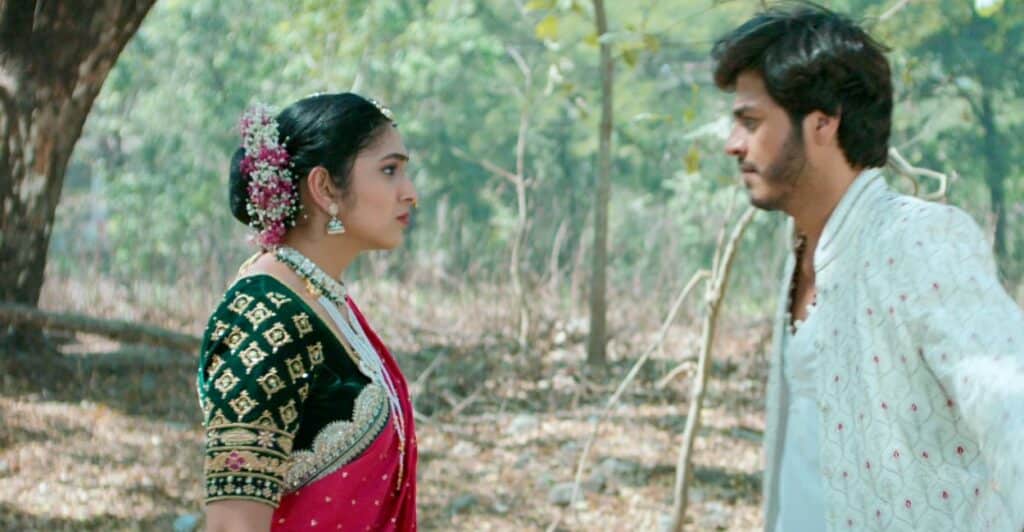
Abhijit Amkar: Earnest Charm as the Reluctant Hero
Abhijit Amkar brings sincerity and likability to Abhi, creating a character we root for even when his decisions defy logic. Yes, critics note his Shah Rukh Khan-inspired mannerisms, but there’s something endearing about an actor wearing his influences on his sleeve while still finding moments of genuine originality.
His comic timing shines in the ensemble sequences—the interactions with the ticket checker, the escalating absurdity of their journey, the dream sequence in Kashmir that’s both parody and genuinely romantic. But what’s more impressive is how he handles the quieter moments, the growing realization that this chaotic escape might be leading him exactly where he needs to be.
The chemistry between Amkar and Indalkar feels natural and unforced. Their banter crackles with energy, their silences speak volumes, and their romantic development feels earned despite the compressed timeline. He’s the perfect grounding force to her fireworks, and together they create the kind of screen partnership that makes romantic comedies work.
The Supporting Ensemble: Adding Flavor to the Journey
Prabhakar More steals every scene he’s in as the railway ticket checker. His character could have been a mere obstacle, but More brings such committed physical comedy and perfect timing that he becomes one of the film’s highlights. The way he initially gets hoodwinked into believing the fighting couple story, then gradually grows suspicious, provides some of the first half’s biggest laughs.
Rajan Tamhane and Leena Pandit as Abhi’s parents bring authenticity to their limited screen time. They represent the traditional expectations the film gently questions without ever demonizing—a tricky balance they navigate with grace.
Sanjay Kulkarni and Sanjeevani Patil as Krutika’s parents add emotional weight to the family dynamics, even if we wish they had more to do.
Shreyas Vaidya makes the most of his role as JP, Abhi’s confidant whose phone conversations become both plot device and comic relief.
Sunil Mangesh appears in a memorable cameo as the perpetually unlucky bachelor. While the sequence feels somewhat tangential to the main narrative, Mangesh commits so fully to the bit that it becomes its own entertaining detour.
The ensemble works because everyone plays it straight within the absurd context—nobody winks too hard at the camera, nobody oversells the comedy. This commitment to the reality of their world, however fantastical, keeps the film grounded even at its most implausible.
Direction and Vision: A Debutant Who Understands His Canvas
Akshay Gore makes the kind of confident directorial debut that immediately marks him as a storyteller who understands both his medium and his audience. There’s a lightness to his touch that never apologizes for the film’s fantasy elements while maintaining just enough emotional truth to keep us invested.
The film’s approach to classic romantic comedy tropes shows a director who’s studied the greats—from the obvious Dilwale Dulhania Le Jayenge homage to the road movie structure that recalls everything from Before Sunrise to countless Bollywood runaway romances. But Gore isn’t just imitating; he’s adding his own Marathi sensibility, his own understanding of contemporary relationship anxieties, his own whimsical humor.
The way he uses the journey structure to develop the relationship feels organic. Every encounter—the ticket checker, the cop, the random strangers—serves both comedic and character development purposes. These aren’t just obstacles to overcome; they’re mirrors reflecting different aspects of Abhi and Krutika’s growing connection.
Gore’s dialogue writing deserves special mention. The banter between the leads feels natural, culturally specific, and genuinely witty. The verbal sparring about ego and chivalry, the gradual softening of defenses, the moments of unexpected vulnerability—all of this comes through in dialogue that sounds like how people actually talk, not how screenwriters think they should talk.
The pacing occasionally wobbles in the second half when the initial premise’s energy starts to fade and the film hasn’t yet arrived at its revelatory twist. But Gore always finds his way back, and that climactic revelation justifies the patience required to get there. It’s the kind of twist that makes you want to immediately rewatch the film, catching all the clues you missed the first time.
Technical Brilliance: Crafting the Whimsical World
Cinematography: Capturing the Journey
Rajesh Nadone‘s camera work understands the assignment: keep it light, keep it moving, and let the performances shine. The cinematography serves the story without calling unnecessary attention to itself—always a sign of smart visual storytelling.
The outdoor sequences benefit from natural lighting that gives the journey an authentic feel. The Mumbai railway station chaos, the small-town encounters, the coastal Alibag sequences—all of these feel grounded in real Maharashtra geography even as the plot defies geographical logic.
What’s particularly effective is how Nadone’s camera captures the growing intimacy between the leads. The framing gradually shifts from wider shots that emphasize their separation to closer compositions that reflect their emotional proximity. It’s subtle work that supports the narrative arc without being obvious.
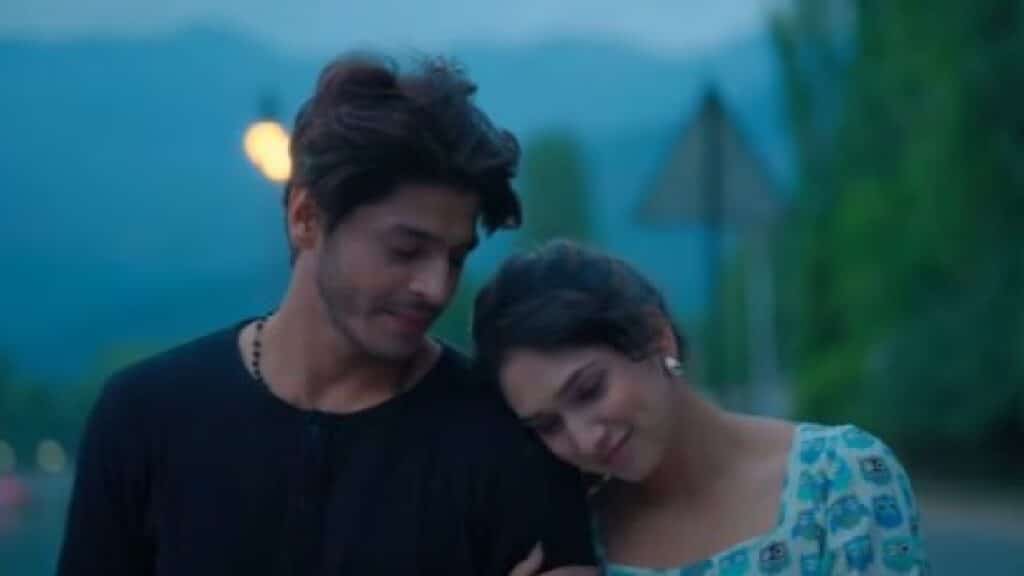
Music: Light Touch with the Title Track Shining
Pravin Koli and Yogita Koli deliver a three-song soundtrack where less is definitely more. The title track emerges as the standout—catchy, energetic, and perfectly encapsulating the film’s playful spirit. It’s the kind of song that gets stuck in your head and makes you smile every time it surfaces.
The rest of the soundtrack stays appropriately low-key, never overwhelming the narrative or feeling like obligatory commercial insertions. In an era of films stuffed with forgettable songs, this restraint feels refreshing.
Tejas Padave‘s background score could have been more distinctive in places, but it never intrudes or distracts. It serves the film’s breezy tone even if it doesn’t particularly elevate emotional moments.
Sachin Kamble‘s choreography keeps things simple and fun, avoiding the over-choreographed feeling that can kill spontaneity in romantic moments.
Editing: Maintaining the Flow
Sandesh Koli‘s editing keeps the first half moving with admirable briskness. The whacky encounters flow naturally into one another, the banter scenes are cut with precision for maximum comic impact, and the overall rhythm keeps audiences engaged.
The second half reveals some looseness—certain sequences could have been tightened, and the pre-climax section occasionally feels like it’s marking time before the big revelation. But these are relatively minor issues in an otherwise well-constructed film.
What’s particularly impressive is how the editing handles the film’s tonal shifts. Moving from broad comedy to genuine romance to thriller-adjacent mystery (who is Krutika really?) requires delicate balance, and Koli navigates these transitions smoothly.
Production Design: Authenticity on a Budget
Mohit Pabarkar‘s art direction works within obvious budget limitations but makes intelligent choices about where to invest resources. The wedding set-pieces feel authentic to Marathi culture, the small-town environments ring true, and the overall production design never breaks the spell even if it’s clearly not working with blockbuster money.
The film smartly uses real locations, allowing actual Maharashtra to provide production value that would be impossible to recreate on sets. This groundedness helps sell even the most fantastical plot developments.
Cultural Context: A Love Letter to Modern Maharashtra
This Lagnacha Shot movie review must acknowledge how beautifully the film captures contemporary Marathi culture’s tensions between tradition and modernity. The arranged marriage setup that feels simultaneously archaic and still-relevant, the family dynamics that balance respect with individual autonomy, the small-town Maharashtra atmosphere—all of this creates a specifically Marathi context that enriches the universal romantic comedy framework.
The film gently questions traditional expectations without ever becoming preachy or dismissive. Abhi’s parents aren’t villains; they’re products of their generation trying to do right by their son in the only way they know how. Krutika’s fierce independence doesn’t make her anti-family; it makes her someone navigating the space between honoring her roots and choosing her own path.
There’s also something refreshing about a Marathi romantic comedy that doesn’t feel the need to replicate Bollywood or Hollywood templates wholesale. Yes, the DDLJ homage is obvious and intentional, but the film around it feels distinctly regional in its sensibilities, its humor, and its emotional truth.
Strengths and Minor Weaknesses
What Works Magnificently
- Priyadarshini Indalkar’s powerhouse performance – A star-making turn that balances fire and vulnerability perfectly
- Akshay Gore’s whimsical directorial vision – A debutant who trusts his material and his audience
- That ingenious climactic twist – Makes you want to immediately rewatch with new understanding
- Sparkling chemistry between the leads – Genuine, unforced, thoroughly engaging
- Sharp, witty dialogue – Feels natural while being consistently entertaining
- First half energy and pacing – Breezy, fun, consistently delivers laughs
- Authentic Marathi cultural context – Specific without being exclusionary
- The ensemble cast’s commitment – Everyone plays it straight within the absurd premise
Where It Could Improve
- The premise requires generous suspension of disbelief – Last-minute arranged marriages, no luggage or money, 70km walks in wedding clothes
- Second half pacing sags – Energy from the first half dissipates before the climactic revelation
- Some supporting characters underdeveloped – We want more depth for the families
- Geographic implausibilities – The Mumbai-to-Alibag journey doesn’t quite track logically
- Runtime could lose 10-15 minutes – Particularly in that pre-climax stretch
- Background score misses opportunities – Could have enhanced emotional resonance more effectively
Final Verdict: 4/5 Stars ⭐⭐⭐⭐
Lagnacha Shot is exactly what feel-good Marathi cinema should be—a film that remembers entertainment doesn’t require cynicism, that romance can be both whimsical and emotionally honest, and that audiences appreciate smart twists wrapped in accessible packaging.
This Lagnacha Shot movie review celebrates a film that succeeds far more than it stumbles. Yes, the premise requires you to park your logic at the door. Yes, the second half doesn’t quite maintain the first half’s momentum. Yes, some plot mechanics don’t bear close scrutiny. But these are minor complaints about a film that charms consistently, entertains generously, and features a genuinely revelatory performance from Priyadarshini Indalkar.
For Akshay Gore, this debut announces a talent to watch. His willingness to embrace whimsy while maintaining emotional core, to honor romantic comedy traditions while adding fresh perspective, to trust audiences to enjoy the ride without over-explaining every choice—these are the marks of a filmmaker who understands his craft.
The Joy of Pure Entertainment
There’s a specific pleasure in watching a film that knows exactly what it is and executes that vision with confidence and charm. In an industry increasingly chasing pan-Indian formulas or gritty realism, Lagnacha Shot feels like a reminder that sometimes what we need most is to simply smile for two hours.
The whimsy is intentional. The implausibility is the point. And somewhere in all that controlled chaos is a genuine love letter to romance itself—imperfect, delightful, and thoroughly winning.
Perfect for: Weekend entertainment, date nights, anyone needing a mood lift, fans of light-hearted Marathi cinema, viewers who appreciate romantic comedies that don’t insult their intelligence even while asking them to suspend disbelief.
Go in expecting nothing more than breezy entertainment with heart, and Lagnacha Shot will exceed those expectations. Sometimes, that’s more than enough.
