


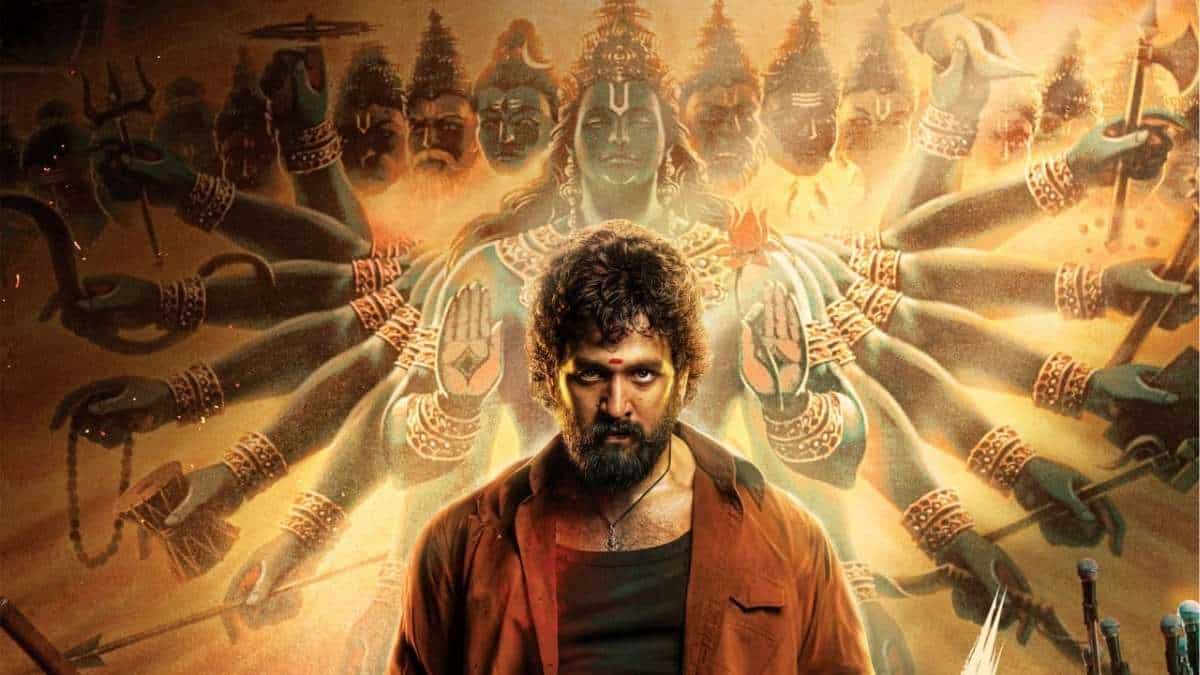
Akhil Akkineni steps into the most demanding role of his career with Lenin, a rural drama that uses the timeless conflict of the Mahabharata as its emotional and thematic backbone. Directed by Murali Kishor Abburu and set against the backdrop of a village’s real-life Bharatham Jatara festival, the film weaves friendship, love, and betrayal into a story that feels both intimate and epic in scale. Anchored by a committed performance from its lead and a strong ensemble cast, Lenin arrives as one of the most sincere attempts at rural storytelling in recent Telugu cinema.
Lenin tells the story of an orphan boy who grows up in the fictional village of Srirampuram and finds his life bound to two people, his closest friend Vasanth and his love interest Bharathi, against the backdrop of the village’s annual Draupadi Amman jatara. What begins as a warm, nostalgic drama about childhood bonds gradually transforms into an intense tale of loyalty and conflict, drawing deliberate parallels to the Mahabharata’s Kurukshetra. Akhil Akkineni delivers a career-best performance as the emotionally torn protagonist, ably supported by Bhagyashri Borse and a richly textured supporting cast including Pramod Panju, Sivaji, Brahmaji, and Easwari Rao. With S. Thaman’s evocative music, Leon Britto’s earthy cinematography, and a purposeful first half, Lenin largely succeeds in delivering the rooted, emotionally driven experience it sets out to create, even if the momentum dips slightly through parts of the second act.
Cast & Crew
| Role | Name |
|---|---|
| Director | Murali Kishor Abburu |
| Lead Cast | Akhil Akkineni, Bhagyashri Borse |
| Supporting Cast | Pramod Panju, Sivaji, Brahmaji, Easwari Rao, Getup Srinu, Karthikeya Dev |
| Special Voiceover | Jr NTR |
| Music Director | S. Thaman |
| Cinematographer | Leon Britto |
| Editor | Navin Nooli |
| Producers | Nagarjuna Akkineni, Suryadevara Naga Vamsi |
| Genre | Rural Drama, Action |
| Runtime | 159 minutes |
| Release Date | July 10, 2026 |
| Certificate | U/A |
Plot Summary
The story begins in 1976 in Srirampuram, a fictional Andhra Pradesh village, where an orphan boy is taken in by the family of the village head. He grows into Lenin, whose life becomes deeply intertwined with two people: Vasanth, the elder son of the household who becomes like a brother to him, and Bharathi, the daughter of another influential family, who becomes the emotional centre of his adult life. The first half unfolds as a gentle, unhurried rural drama built around childhood friendship, festival traditions, and a slow-blooming romance, carefully establishing the village’s power structures and unspoken rules. As the story moves past the interval, long-simmering fault lines beneath the central friendship come to the surface, and the narrative shifts into a far more charged and intense space. The annual Bharatham Jatara, rooted in the legend of Draupadi Amman, becomes both the literal and symbolic battlefield on which loyalties, love, and duty are ultimately tested.
Performances
Akhil Akkineni delivers the finest and most rooted performance of his career as Lenin. He brings genuine rawness to the role, convincingly portraying a man caught between deep affection and simmering fury, particularly excelling in the film’s intense second-half stretches.
Bhagyashri Borse is outstanding as Bharathi, bringing quiet strength and natural screen presence to a character that could easily have become a mere symbol. Her chemistry with Akhil anchors the film’s emotional core beautifully.
Pramod Panju, who plays Vasanth, delivers one of the standout performances of the film. He blends seamlessly into the character and emerges as one of the strongest pillars holding the narrative together.
Sivaji brings real intensity and gravitas to his grey-shaded role, adding meaningful weight to the village’s internal politics with a performance that lingers well after the credits roll.
Brahmaji is equally effective in adding texture and depth to the village’s social fabric, rounding out the ensemble with a grounded, believable presence.
Easwari Rao brings genuine emotional heft to the family scenes, lending warmth and gravity to pivotal moments in the story.
Getup Srinu and Karthikeya Dev make the most of their roles, contributing memorable moments that add colour and intrigue to the village universe.
Jr NTR’s special voiceover, used sparingly at key narrative turns, is a lovely surprise, lending certain scenes an added sense of scale and emotional resonance.
Technical Craft
Direction
Murali Kishor Abburu shows genuine conviction in his vision, building an entire village universe around the Mahabharata’s core conflict rather than treating it as a passing metaphor. His patient, textured approach to the first half pays off richly once the story pivots at the interval.
Cinematography
Leon Britto’s camera work captures the earthiness of the village setting with striking naturalism, favouring grounded, authentic visuals over glossy polish, a choice that beautifully complements the story’s rooted ambitions.
Music
S. Thaman’s music does a lot of quiet, effective work in establishing the film’s rural identity, leaning into folk instrumentation without ever tipping into cliché. The songs integrate well into the narrative, and the background score amplifies the second half’s intensity without overwhelming it.
Editing
Navin Nooli keeps the pre-interval and interval portions tight and purposeful, giving the film its most confident pacing in these stretches.
Also Read: Idhayam Murali Review: Atharvaa Shines In A Breezy But Overstretched Ode To Unspoken Love
Strengths
- Career-best, deeply committed performance from Akhil Akkineni
- Bhagyashri Borse’s natural, confident screen presence
- Sincere and ambitious use of the Mahabharata framing
- Strong supporting cast, especially Pramod Panju and Sivaji
- S. Thaman’s evocative folk-rooted score
- Naturalistic, earthy cinematography by Leon Britto
- A well-crafted, tightly paced first half and interval block
- A thoughtful voiceover cameo by Jr NTR that adds scale
Weaknesses
- The unhurried opening stretch may test the patience of viewers seeking quicker pacing
- The second act loses some of the tautness established earlier in the film
- Certain narrative beats prioritise dramatic intensity over economy in the latter half
Final Verdict: ⭐⭐⭐⭐ 4/5
Lenin is a rooted, emotionally intense rural drama that uses its epic inspiration with far more conviction than most films attempt. It doesn’t use the Mahabharata as decoration but commits to it fully, letting the festival, the rivalries, and the eventual confrontation grow organically out of character rather than forcing an epic parallel onto an ordinary plot. Anchored by a career-best performance from Akhil Akkineni, strong support from Bhagyashri Borse and the ensemble cast, and a memorable score from S. Thaman, Lenin delivers a slow-building, deeply felt story about friendship, loyalty, and love turning into conflict. It’s a must-watch in theatres for audiences who enjoy intense, emotionally driven cinema.
What is the age rating of Lenin?
Lenin has been certified U/A by the Central Board of Film Certification, making it suitable for general audiences with parental guidance for younger viewers.
Is Lenin suitable for children?
Given its intense emotional themes, village conflict, and dramatic confrontations, Lenin is best suited for older children and family audiences accompanied by adults, rather than very young viewers.
Is Lenin based on a true story?
No, Lenin is a fictional drama. While it is inspired thematically by the Mahabharata and set against a real festival tradition, the Bharatham Jatara, the characters and events in the film are fictional.
