


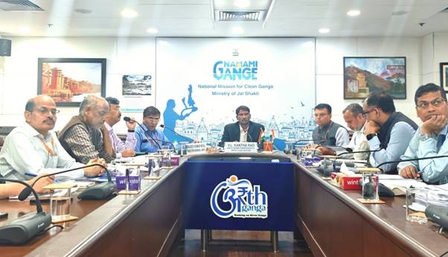
The 21st Meeting of the Central Monitoring Committee (CMC) on river rejuvenation recently assessed the status of polluted river stretches based on the CPCB’s 2025 report. Chaired by V. L. Kantha Rao, Secretary of the Department of Water Resources, River Development, and Ganga Rejuvenation, Ministry of Jal Shakti, the meeting focused on various aspects including sewage treatment plants, floodplain zoning, and institutional monitoring in states like Uttarakhand, Uttar Pradesh, Bihar, and others.
Officials at the meeting, including Rajeev Kumar Mital from the National Mission for Clean Ganga, reviewed the progress of states in implementing approved Action Plans to address polluted river stretches. Emphasis was placed on the effective utilization of infrastructure, regulatory compliance, and timely project execution to enhance river water quality. Priority areas for improvement were identified, such as sewage treatment, industrial pollution control, and real-time monitoring for pollution control efforts.
A comparative analysis of polluted river stretches from 2018, 2022, and 2025 revealed an overall reduction in the number of polluted stretches since 2018. However, some states reported new polluted stretches and deterioration in specific river segments, prompting the need for targeted corrective measures. The Committee urged states to adopt a time-bound, outcome-oriented strategy for river rejuvenation, focusing on operational efficiency, inter-departmental coordination, and sustained compliance for long-term water quality enhancement.
