


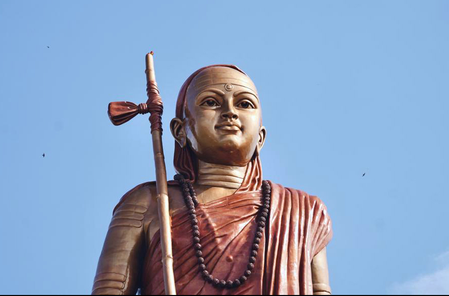
Adi Shankaracharya, an 8th-century Indian philosopher, played a crucial role in establishing the Char Dham Yatra and revitalizing significant Hindu pilgrimage spots like Badrinath and Kedarnath. He not only restored sacred temples but also promoted unity among spiritual traditions across India.
Shankaracharya’s vision led to the creation of four major pilgrimage centers in India’s cardinal directions: Badrinath in the north, Puri in the east, Dwarka in the west, and Sringeri in the south. These sites symbolized religious and cultural harmony, encouraging devotees from diverse regions to embark on a shared spiritual journey.
One of Shankaracharya’s key contributions was setting up four mathas, or monastic centers, to supervise these pilgrimage destinations. These mathas, including Jyotirmath, Govardhana Math, Sharada Math, and Sringeri Math, continue to uphold religious practices and teachings, preserving the spiritual essence of these sites.
Shankaracharya’s efforts extended to the restoration of the Badrinath shrine, where he is said to have found the idol of Lord Badrinath and consecrated it in a new temple. He also organized temple rituals and brought Nambudiri Brahmins from Kerala to serve as priests, a tradition that endures today.
In Kedarnath, Shankaracharya reconstructed the temple, reestablishing it as a significant center for Shaivite worship. His spiritual journey culminated near the Kedarnath shrine, a site of great spiritual significance. Through his teachings and hymns, Shankaracharya reinforced the sanctity of these pilgrimage sites, laying the groundwork for the enduring popularity of the Char Dham Yatra.
The Char Dham Yatra remains a revered Hindu pilgrimage, drawing thousands of devotees annually seeking blessings, spiritual purification, and ultimately, liberation. Nestled in the Himalayas, the shrines of Yamunotri, Gangotri, Kedarnath, and Badrinath provide a serene environment for reflection and devotion. The traditional yatra sequence starts at Yamunotri, proceeds to Gangotri, Kedarnath, and concludes at Badrinath.
