


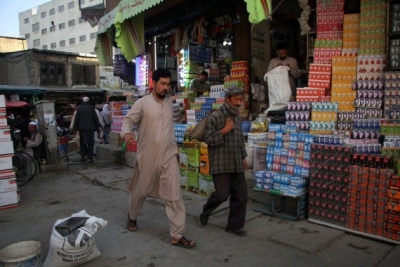
Labourers in Afghanistan are facing challenges as they are only able to secure work for less than two days a week on average, as per a recent World Food Programme (WFP) report. The report indicates that unskilled workers are finding employment for just 1.9 days per week, a decrease from previous years. Despite stable food markets and a relatively strong currency, daily wages average 309 Afghanis, showing a slight improvement from the previous week, according to Amu TV.
This situation poses a continuous hardship for many Afghan families who rely on daily labor to sustain themselves. Despite the availability of food supplies and stabilized prices, numerous households in Afghanistan are struggling due to limited income opportunities. The Afghan currency remains stable at around 64.3 Afghanis per US dollar, but the cost of staple foods has risen compared to the previous year, putting additional strain on farmers.
The WFP report underscores the ongoing humanitarian crisis in Afghanistan, where despite some improvements like eased inflation and functional markets, livelihoods for many Afghan households have not significantly improved. The main challenge for millions in Afghanistan who depend on casual labor is not the availability of food but rather the affordability of it. The United Nations Office for the Coordination of Humanitarian Affairs (OCHA) recently warned about the worsening nutrition crisis in Afghanistan, with 3.7 million children expected to suffer severe malnutrition by 2026.
The OCHA highlighted the urgent need for funding to address the growing humanitarian concerns in Afghanistan and prevent irreversible harm. It noted a rapid deterioration in the nutrition situation in 2026, with worsening wasting levels in most provinces compared to the previous year. This crisis is unfolding even before the peak wasting season from July to September, signaling an early and deepening crisis in the country.
