


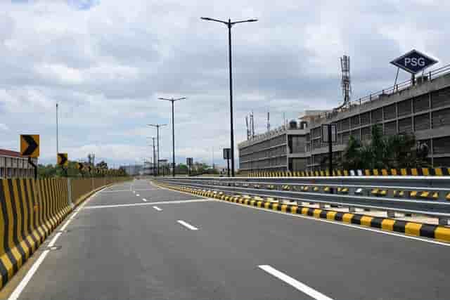
More than three months after the installation of an AI-powered speed enforcement system on the G.D. Naidu Flyover in Coimbatore, Tamil Nadu, the project is still in the testing phase. This delay has raised concerns about road safety on one of the city’s busiest elevated corridors. The flyover, spanning 10.1 km, was designed to alleviate congestion and enhance traffic flow but has experienced an increase in speeding and traffic violations since its opening.
Authorities have set up 44 AI-enabled cameras and 16 digital display boards along the flyover to tackle the rising violations. However, technical issues and concerns regarding accuracy have prevented the system from becoming fully operational. This delay has become a significant issue for both traffic police and commuters, limiting the police’s ability to effectively manage traffic on the flyover.
During a recent road safety review meeting, police officials urged the State Highways Department to expedite the trial run’s completion. They emphasized that the extended testing period has led to motorists driving well above the speed limit, posing a higher risk of accidents. Despite the introduction of an AI-based surveillance system to automate violation detection, penalties cannot be issued until the software is fully calibrated and approved for regular use.
Commuters have expressed doubts about the system’s reliability, with complaints about occasional misidentifications of violations, especially related to seat belt compliance. Concerns have been further fueled by videos circulating on social media highlighting alleged technical glitches. Traffic police have clarified that no fines are being issued during the testing phase and enforcement will only commence once the technology meets the required accuracy standards.
Acknowledging the technical challenges, officials from the Highways Department have directed the private firm responsible for the system’s installation to address the defects. Initially showing an accuracy level of around 20%, the AI software has undergone continuous data training and refinement, improving its accuracy to nearly 80%. To facilitate further calibration work, traffic restrictions have been requested on parts of the flyover where corrections cannot be made while vehicles are in motion. The system is expected to complete its trial phase and be fully operational within the next month, enabling automated traffic enforcement on the flyover.
