


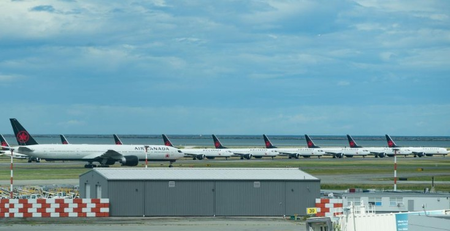
Air Canada has announced the suspension of several routes to the United States because of significantly increased jet fuel prices. The airline stated that the surge in fuel costs, which have doubled since the beginning of the Iran conflict, has made certain routes economically unviable. Among the affected services are flights from Montreal and Toronto to New York’s John F. Kennedy International Airport, which will be paused from June 1 to October 25.
The suspensions include a mix of transborder and domestic services, with Air Canada also halting its Toronto-Salt Lake City route on June 30, with a potential resumption planned for 2027. These changes will impact approximately 1 percent of the airline’s annual available seat miles, according to the statement released by the carrier. Meanwhile, the United States Department of the Treasury has extended a waiver allowing the delivery and sale of sanctioned Russian oil that was already loaded onto vessels, extending the deadline to May 16 from the previous expiration on April 11.
The decision to extend the waiver, part of efforts to stabilize global energy prices amid escalating tensions, was made in light of the ongoing US-Israeli conflict with Iran. This move comes as various countries grapple with the challenges posed by rising energy costs and supply disruptions. Despite the extension, the renewed license maintains stringent restrictions on transactions involving specific countries. Additionally, recent comments by US Treasury Secretary Scott Bessent suggested that Washington does not plan to continue such waivers indefinitely given the escalating geopolitical tensions.
Global oil prices experienced a notable drop of about 9 percent on Friday, settling near $90 per barrel after Iran temporarily reopened the Strait of Hormuz, a critical global energy transit route. Nonetheless, the broader conflict has already led to what the International Energy Agency described as the most severe disruption to global energy supplies in history. The ongoing war, now in its eighth week, has reportedly caused damage to over 80 oil and gas facilities across West Asia.
