


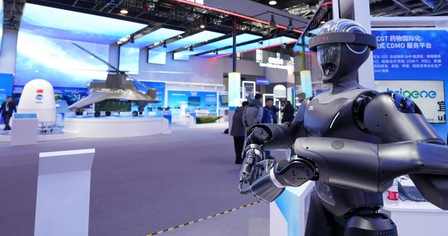
The Trump Administration’s competition with China spans artificial intelligence, semiconductors, and biotechnology, with lawmakers stressing it as a crucial “moral fight” impacting global power and economic security. At the Hill & Valley Forum in Washington, strategies to counter China’s tech rise were outlined, focusing on export controls, domestic investment, and collaboration with allies. Senator Jim Banks highlighted the significance of the AI race, framing it as a critical aspect of the broader geopolitical landscape, emphasizing the need to prevent China from dominating.
Banks referenced the Trump administration’s AI action plan, advocating for stricter export controls on advanced semiconductor chips to China and other adversaries. He emphasized the importance of his proposed GAIN AI Act, aimed at tightening these restrictions to safeguard against aiding adversaries. Beyond technological advancements, Banks underscored the moral dimension of the competition, emphasizing the need to prioritize American-made chips for domestic use over aiding adversaries like China.
Representative John Moolenaar, Chairman of the House Select Committee on China, echoed the call for a more robust stance against China, acknowledging the necessity for a defensive approach to ensure victory in the competition. Moolenaar highlighted the vulnerability of US dependence on China in critical supply chains, emphasizing the need to halt enabling practices that benefit the US’s chief rival. He stressed the importance of stronger controls, supply chain resilience, and workforce development to counter adversaries’ potential exploitation of American technology.
Senator Todd Young, Chairman of the National Security Commission on Emerging Biotechnology, emphasized the critical role of US leadership in biotechnology, advocating for a comprehensive action plan to maintain an edge in the field. Young, alongside other experts, highlighted the significance of public-private collaboration in driving advancements in emerging technologies. The discussions at the forum underscored a broader shift in Washington, recognizing artificial intelligence, semiconductors, and biotechnology as key battlegrounds in the strategic competition with China.
