


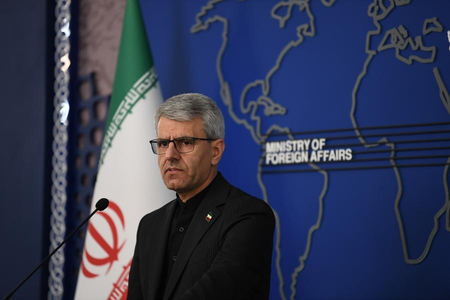
Iran’s Foreign Ministry spokesman, Esmaeil Baghaei, emphasized that Iran has no intention of sending its enriched uranium to another country, specifically ruling out the United States as a destination. Baghaei clarified that recent statements by Foreign Minister Seyed Abbas Araghchi were made in the context of the ceasefire between Iran and the United States, not as indications of a new diplomatic initiative. Araghchi had previously assured that the Strait of Hormuz would remain open for commercial shipping during the ongoing truce.
Baghaei further explained that Iran’s decision to implement safe-passage conditions for vessels passing through the strait was based on existing agreements with the United States and did not signify any new deal. He criticized the U.S. for allegedly failing to extend the terms of the ceasefire to Lebanon, a claim disputed by Washington and Jerusalem. Additionally, Baghaei warned of potential “countermeasures” if the U.S. continued its naval blockade of the Strait of Hormuz, emphasizing that discussions to extend the ceasefire had not occurred.
The tensions escalated following Iran’s restrictions on vessel passage through the strait in response to joint strikes on its territory. Subsequently, the U.S. imposed its own blockade, disrupting maritime traffic to and from Iranian ports after peace talks in Islamabad collapsed. Reports suggest that a second round of negotiations between the U.S. and Iran is anticipated in Pakistan over the weekend, with a focus on resolving the conflict and safeguarding Iran’s interests.
