


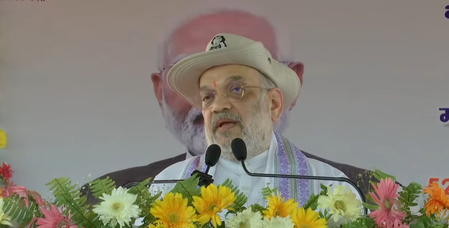
Union Home Minister Amit Shah led a high-level meeting in Purnea, Bihar, focusing on security along the India-Nepal border. The discussions aimed at bolstering security measures, preventing infiltration, and improving intelligence coordination in border districts. Shah’s call for action against infiltrators hinted at potential stricter measures in the future.
The meeting attendees included Bihar Deputy Chief Minister Samrat Choudhary, Minister of State for Home Affairs Nityanand Rai, top police officials, and district authorities from border regions like Purnea, Araria, Katihar, and Kishanganj. Discussions revolved around monitoring and managing the 700-km-long India-Nepal border, with a new strategy being devised to combat suspicious activities, illegal infiltration, and smuggling.
Authorities stressed the need for expanded technical surveillance, stronger intelligence networks, better inter-agency coordination, and increased joint operations between local police and the Sashastra Seema Bal (SSB) along the border. The region’s strategic significance, bordering Nepal, Bangladesh, and the Siliguri Corridor, prompted calls for heightened security infrastructure.
Purnea city was on high alert during Shah’s visit, with extensive security measures in place, including heavy police presence, route monitoring, crowd management, and health support services. Shah’s Bihar visit, starting on February 25, focused on Seemanchal, with reviews, interactions with security personnel, and inspections under the Vibrant Village Program–2. The visit is crucial for national and border security considerations.
