


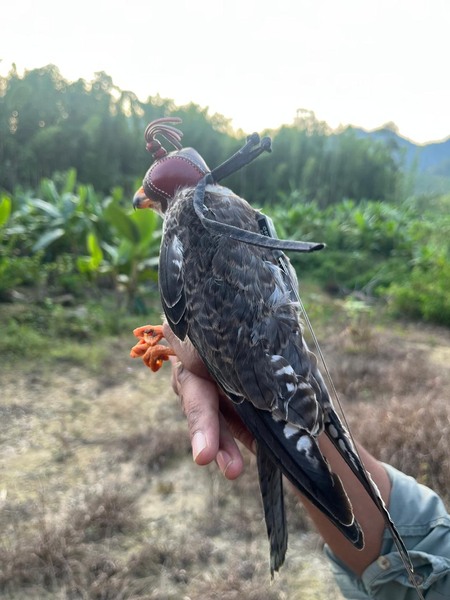
Three Amur falcons, named Ahu, Alang, and Apapang, were tagged with satellite transmitters in Manipur in November last year. They have completed a remarkable transcontinental journey and have been traced to various African countries. The birds were part of a satellite-tracking research program conducted by the state Forest Department in collaboration with the Wildlife Institute of India (WII).
These raptors were released from the Chiuluan roosting site by a team of WII scientists, Tamenglong Forest Division officials, and village volunteers. The tagged Amur falcons swiftly reached Africa within about nine to ten days, where they have been spending the winter in different countries on the continent.
Dr. R. Suresh Kumar from WII provided an update stating that all three birds, Ahu, Apapang, and Alang, are in good health and active. Ahu is currently located in Somalia, Apapang in Zimbabwe, and Alang in Botswana. The concerns regarding Ahu’s well-being have been dispelled, confirming that the bird is active and engaged in local movements within Somalia.
The satellite-tagging initiative aims to study the migratory patterns of the Amur falcon, known for its extensive migration from northern China and southeastern Siberia to southern Africa. Local names for these birds in Manipur and Nagaland are ‘Akhuaipuina’ or ‘Kahuaipuina’ and ‘Molulem,’ respectively. Chiuluan and Guangram villages in Tamenglong district serve as key roosting sites for these falcons, attracting them in large numbers annually.
To safeguard these migratory birds, hunting, trapping, or selling them is strictly prohibited in Tamenglong and Noney districts during their seasonal visit. The conservation efforts are overseen by the Union Ministry of Environment, Forest and Climate Change to protect the Amur falcon, a species of ecological importance.
