


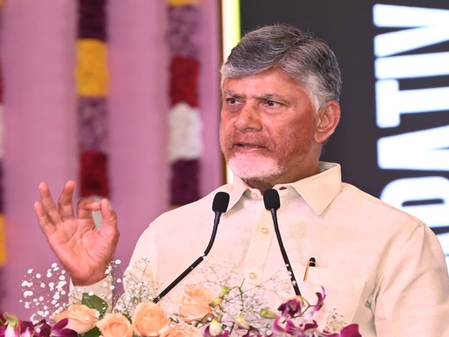
Andhra Pradesh Chief Minister N. Chandrababu Naidu emphasized the importance of narrating stories of heroes from Indian Puranas to children instead of popular Hollywood characters like Batman, Spiderman, and Superman. He stressed the significance of connecting the younger generation with India’s rich cultural heritage by introducing them to figures from Indian epics such as Ram, Krishna, Arjuna, and Hanuman. Naidu urged parents and teachers to highlight the virtues, courage, and wisdom of these Puranic heroes to help youngsters discern between good and evil and instill moral values.
The Chief Minister underscored that comprehending these epics not only fosters pride in India’s timeless contributions to philosophy, ethics, and governance but also aids in nurturing a sense of national identity. He further advocated for educating children about concepts like ‘Ram Rajya’ and emphasized the superiority of Indian epics like Mahabharata and Ramayana over modern entertainment like the Avatar movie. Naidu also emphasized India’s civilizational knowledge heritage and its journey towards scientific and technological leadership.
During the inaugural session of the seventh Bharatiya Vijnan Sammelan, Naidu was accompanied by Rashtriya Swayamsevak Sangh (RSS) chief Mohan Bhagwat and Union Minister of State, Science and Technology, Dr. Jitendra Singh, among others. He highlighted the importance of preserving India’s ancient knowledge systems while advancing in the fields of science and technology to secure a bright future. Naidu expressed confidence in India’s ability to reclaim its historical scientific glory and continue contributing significantly to global scientific advancements.
Reflecting on ancient achievements, the Chief Minister referenced the urban planning of the Indus Valley civilization, the global influence of yoga, the foundational principles of Ayurveda, and the esteemed centers of learning like Takshashila and Nalanda. He also acknowledged the enduring inspiration provided by great Indian thinkers such as Aryabhata, Bhaskaracharya, Charaka, Dhanvantari, and Kautilya.
