


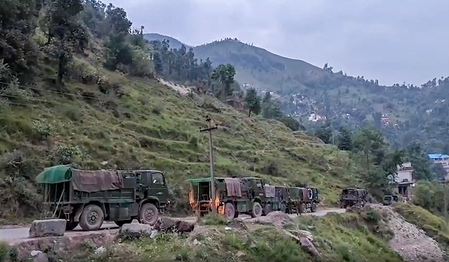
The anti-terrorist operation known as ‘Operation Sheruwali’ in Jammu and Kashmir’s Rajouri district has been ongoing for 23 days. It is taking place in the dense Dorimal forests of the Gambir Mughlan area, making it one of the longest counter-terror operations in the region. Joint forces, including the Army, J&K Police, and CRPF, are conducting intensified operations in the challenging forest terrain.
The operation is focused on the densely forested hills of Dorimal, where the rugged landscape and thick vegetation present significant challenges to the ground troops. Despite the tough conditions, security personnel are vigilant, carrying out thorough searches, increased surveillance, and area domination measures to monitor any suspicious activities. This sustained effort underscores the security forces’ commitment to ensuring peace and safeguarding the border district.
On June 7, an Indian Army soldier lost his life during Operation Sheruwali after accidentally slipping from a rock in the mountainous terrain. The soldier, part of the anti-terror operation, suffered serious injuries after losing balance and slipping down a rocky slope. Despite immediate medical evacuation, he succumbed to his injuries.
Heavy firing and shelling occurred in Rajouri’s Dorimal forest area on May 28 as Operation Sheruwali entered a critical phase. Security forces intensified the cordon to eliminate suspected militants hiding in the dense terrain. A significant deployment of security forces, along with reinforcements and logistical support, was rushed to the encounter site to establish a strong cordon and prevent any potential militant escape attempts.
The ongoing large-scale counter-terrorism mission, initiated in late May, aims to locate and neutralize armed infiltrators in the rugged mountainous terrain of the region. Rajouri and Poonch, the twin border districts in the Jammu region, have become sensitive areas for terrorist activities due to their long and porous Line of Control with Pakistan occupied Kashmir. Previously declared militancy-free, these districts have seen a resurgence in terrorist presence, with armed groups using the natural terrain as safe hideouts. Security forces have faced ambushes and attacks, leading to extensive area-domination and search operations.
