


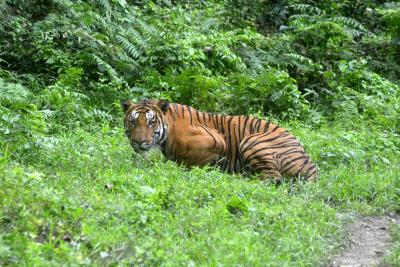
Assam Chief Minister Himanta Biswa Sarma praised the state’s achievements in wildlife conservation, noting a significant increase in the tiger population from 70 in 2006 to 227 in 2022. He emphasized the strong political dedication and collective efforts that led to this growth.
Sarma mentioned that Assam has now become a secure environment for various wildlife species, not just the one-horned rhinoceros. He credited the success of conservation efforts to the support and active involvement of the public and local communities.
The state of Assam has emerged as a key player in wildlife conservation in India over the past two decades. Protected areas like Kaziranga National Park, Manas National Park, Orang National Park, and Nameri National Park have played crucial roles in safeguarding endangered species.
Kaziranga National Park, a UNESCO World Heritage Site, is renowned for hosting the largest population of one-horned rhinoceros globally. Meanwhile, Manas National Park has seen a resurgence in species like tigers and pygmy hogs due to conservation efforts.
Efforts to increase tiger numbers in Assam have included various measures such as stringent anti-poaching operations, advanced surveillance technologies like camera traps and drones, and improved coordination between forest departments and security agencies. Community engagement through eco-development committees and awareness programs has also helped reduce human-wildlife conflicts.
The Assam government has stressed the importance of balancing conservation and development. Upgrades in infrastructure within protected areas, better facilities for forest personnel, and continuous monitoring of wildlife corridors have been prioritized to maintain ecological harmony.
Sarma highlighted that the conservation progress extends beyond tigers, emphasizing that Assam’s protected forests now provide safer habitats for elephants, deer, birds, and other species. He reaffirmed the government’s commitment to further strengthening conservation efforts, emphasizing the significance of protecting wildlife for preserving Assam’s natural heritage for future generations.
