


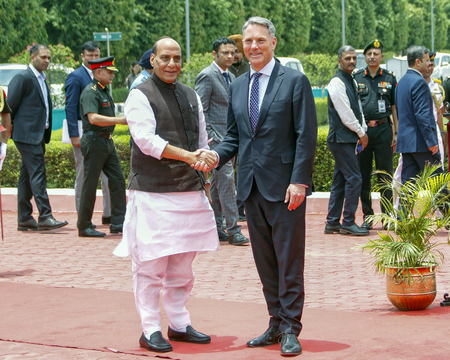
Australia and India have agreed to conduct an annual Defence Ministers’ Dialogue and joint exercises across various domains to enhance cooperation. Australia’s 2026 National Defence Strategy designates the Northeast Indian Ocean as a key area of military interest, recognizing India as a top-tier security partner in the region. The strategy underscores the need for deeper collaboration due to China’s significant military presence in the Indian Ocean.
Maritime security stands out as a key focus area, with collaborative anti-submarine warfare activities already underway between Australian and Indian maritime patrol aircraft. Both countries are also working on an air-to-air refueling agreement and a Joint Maritime Security Collaboration Roadmap to bolster cooperation in the maritime domain. The report emphasizes the importance of defense industry cooperation, highlighting the need for a top-down approach from the governments of India and Australia to unlock the sector’s full potential.
Australia’s Deputy Prime Minister and Minister for Defence, Richard Marles, is set to visit India for the second Australia-India Defence Ministers’ Dialogue. Marles looks forward to meeting with Defence Minister Rajnath Singh to further strengthen the defense partnership following significant progress made during Singh’s visit to Australia last year. The dialogue aims to build on the unprecedented progress achieved in bilateral defense cooperation and enhance mutual ambitions for collaboration.
India and Australia recently held the 10th edition of Defence Policy Talks in New Delhi, signaling increased frequency and complexity of joint exercises. Both nations reaffirmed their commitment to deepen maritime cooperation and strengthen strategic ties for regional stability. The dialogue highlighted the growing trust between the two countries and the shared commitment to enhancing defense collaboration. The Indian delegation was led by Joint Secretary Amitabh Prasad, while the Australian side was headed by First Assistant Secretary, International Policy Bernard Philip.
