


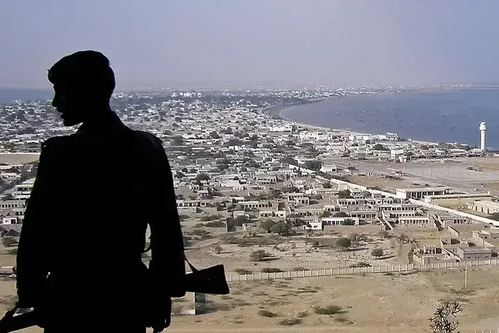
The Baloch Liberation Army’s recent attacks, known as ‘Operation Herof Phase 2.0,’ have intensified the conflict in Balochistan, with strikes reported in 14 cities and 48 sites on January 31. This escalation resulted in casualties in areas like Quetta, Gwadar, and Chagai, with conflicting reports on the number of casualties from both sides. The violence is seen as a response to long-standing grievances of abuse and marginalization faced by the Baloch people in Pakistan.
Balochistan, despite its vast mineral wealth, remains one of Pakistan’s most underdeveloped regions, with little benefit reaching the local residents. Projects like Reko Diq and Saindak, promising substantial revenue, have failed to address the economic disenfranchisement felt by the Baloch people. The province’s resources are exploited without adequate profit sharing, leading to resentment and a perception of being exploited for Islamabad’s and foreign interests.
The insurgency in Balochistan is fueled by enforced disappearances, a policy that has led to thousands vanishing since the early 2000s. Human rights organizations have documented cases of activists, journalists, and citizens being abducted, tortured, and executed extrajudicially by security forces. The lack of accountability for these disappearances has further fueled discontent and mistrust towards the authorities.
Recent years have seen a rise in tensions in Balochistan, marked by incidents like the killing of student Hayat Baloch by paramilitary forces in 2025. The brutal crackdown on protests against exploitation and rights abuses, along with allegations of rigged elections in 2024, have deepened the sense of isolation among the Baloch people. The arrest of BYC leader Mahrang Baloch during anti-violence protests highlights the state’s suppression of dissent and the growing participation, including women, in armed resistance movements like ‘Operation Herof Phase 2.0.’
