


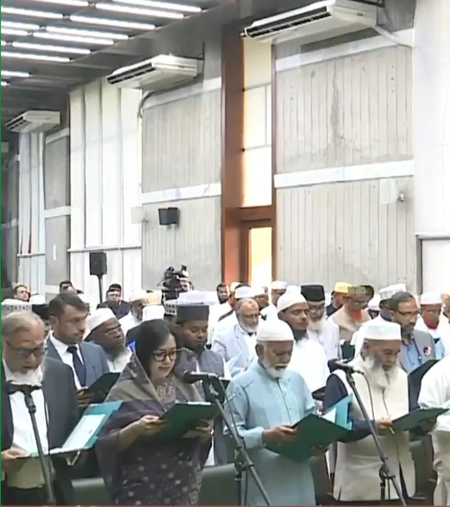
A resurgent Bangladesh Jamaat-e-Islami is making its mark in politics, pushing for immediate constitutional changes and criticizing the new government led by BNP’s Tarique Rahman. Last year, Bangladesh’s largest Islamic party regained registration after being banned for over a decade by the Awami League government. The party’s comeback follows a troubled history of legal restrictions and isolation due to its stance on Bangladesh’s independence and wartime activities.
Jamaat’s reentry into parliamentary politics is seen by some as a return to mainstream engagement, while others view it as a concerning normalization of its controversial past. The party is advocating for the new Parliament to act as a constituent assembly to amend Bangladesh’s constitution based on the “July Charter,” proposed after the 2024 uprising. The Charter aims to reform key institutions, enhance checks and balances, and redefine rules governing executive power, the judiciary, and electoral processes.
Despite facing opposition, the Islamist party has seen significant electoral gains, securing its highest-ever vote share and winning 68 seats in the recent election. This performance has elevated Jamaat from a fringe player to the primary opposition force in parliament. Analysts and rivals warn that the party’s assertive stance and increased involvement in student politics could make it a disruptive force in Bangladesh’s political landscape.
The party’s influence has expanded in regions bordering India, particularly in Khulna, Rajshahi, and Rangpur divisions, where it has gained traction among the population. Historically, Jamaat’s electoral success has varied, with notable wins in alliances with BNP. In the latest election, the BNP-led alliance secured 212 seats, while the Jamaat-led alliance won 77 out of the 297 seats announced.
