


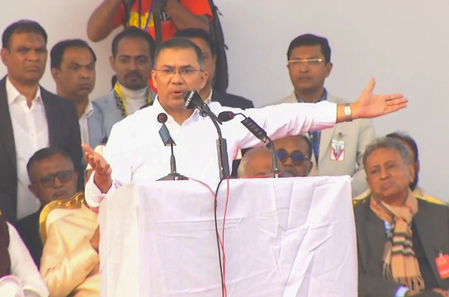
For the first time in decades, Bangladesh is gearing up for general elections without its prominent female political figures. The recent passing of former Prime Minister Khaleda Zia and the exile of ex-premier Sheikh Hasina have left a notable void in the political landscape. As the nation navigates through uncertainty and unrest, all eyes are on Zia’s son, Tarique Rahman, who now leads an alliance as the acting Chairman of the Bangladesh Nationalist Party (BNP).
Rahman’s return to Dhaka after 17 years in exile has sparked discussions on the future of India–Bangladesh relations. In his inaugural address to a large audience upon his homecoming, he emphasized his commitment to Bangladesh’s sovereignty, positioning himself as a guardian of the nation’s independence. He advocated for an all-encompassing society that embraces citizens of diverse faiths and beliefs, striving for peace, security, and unity in a time of heightened instability.
In the domestic political arena, Rahman faces a significant challenge from the Bangladesh Jamaat-e-Islami. While the BNP and Jamaat have historically been allies, recent developments indicate a shift in their relationship. The Jamaat has formed its own coalition for the upcoming February 2026 election, including the National Citizens Party (NCP), a student-led political entity that emerged from the Students Against Discrimination (SAD) movement.
The BNP’s distancing from the Jamaat signifies a strategic move to appeal to a broader voter base, particularly among secular voters. This shift also aims to enhance the party’s international standing in the absence of Sheikh Hasina. The exclusion of the Awami League, founded by Sheikh Mujibur Rahman, from the upcoming polls marks a significant departure from Bangladesh’s political history since independence in 1971.
The evolving political landscape in Bangladesh may impact India-Bangladesh relations, with the BNP’s altered stance potentially influencing bilateral dynamics. While the future trajectory of relations remains uncertain, the current developments suggest a reconfiguration of political alliances and strategies in the lead-up to the crucial elections.
