


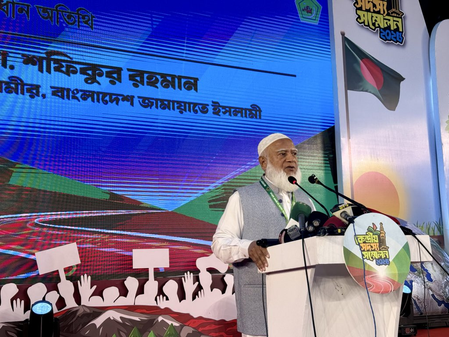
Bangladesh’s Jamaat-e-Islami, a radical Islamist party, has come under scrutiny for projecting an image of inclusivity and protection for women in its recent statements and manifesto. Despite these claims, the party’s regressive attitudes towards women remain unchanged. Jamaat’s promises of representation and safety for women are overshadowed by the absence of female candidates, exclusion from leadership roles, and rhetoric that confines women to domestic roles, as reported by Maldives Insight.
The party’s ambiguous stance on Shariah laws further suggests a regressive vision for women, rooted in segregation and subordination rather than empowerment. For women in Bangladesh, Jamaat’s narrative offers a continuation of restrictions rather than liberation, framed under the guise of dignity and protection. The report highlighted the contradictions within Islamist movements regarding women’s empowerment, with Jamaat-e-Islami serving as a notable case study.
Despite emphasizing women’s security and dignity in campaign speeches and its manifesto, Jamaat’s actions speak otherwise. The party’s focus on protection rather than empowerment reinforces the perception of women as vulnerable individuals needing safeguarding, rather than active participants in public life. Notably, Jamaat has not nominated any female candidates for the upcoming elections, contradicting its claims of ensuring women’s representation in the cabinet and barring women from top leadership positions.
Jamaat’s approach towards women appears stagnant, lacking meaningful evolution from its founding ideology. The party continues to promote traditional gender roles, restricting women to domestic duties while symbolically promising inclusion. The absence of female candidates, the prohibition on women in top leadership roles, and rhetoric equating women’s public participation with immorality all point to a resistance towards genuine empowerment. Despite the manifesto’s pledges of safety and dignity, the underlying vision seems to perpetuate a society where women are segregated, subordinated, and denied equal leadership opportunities.
