


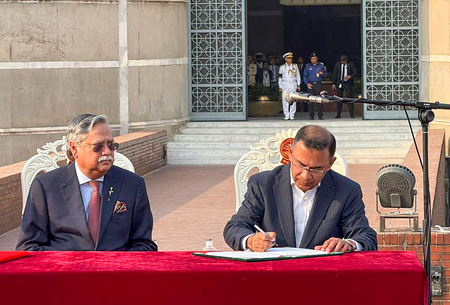
A dispute arose in Bangladesh over the establishment of a Constitutional Reform Council before the new cabinet took office. The Bangladesh Nationalist Party (BNP) members, while being sworn in as parliamentarians, did not participate in the proposed Council, citing a lack of constitutional provision. BNP’s Salahuddin Ahmed emphasized the need to enact laws and reforms within the Parliament to reflect public sentiment.
The BNP leader highlighted that all actions must adhere to constitutional procedures. He pointed out a constitutional provision allowing the Chief Election Commissioner (CEC) to administer oaths if needed. However, he clarified that the CEC lacks authority to administer oaths for a Constitutional Reform Council, raising concerns about the government’s adherence to legal frameworks.
Opposition parties, including Bangladesh Jamaat-e-Islami and the National Citizen Party, boycotted the cabinet swearing-in ceremony, expressing dissatisfaction with the situation. The controversy stems from decisions seeking political validation without legal backing, highlighting the challenges faced by the interim government in gaining legitimacy.
