


The Bhojshala complex in Madhya Pradesh’s Dhar is gaining prominence as a focal point of a cultural and political initiative, with both the Central and state governments working together to repatriate the revered Vagdevi idol from London and revamp the historical site into a significant cultural landmark. Recently, Dhar-Mhow MP and Union Minister of State Savitri Thakur met Union Tourism and Culture Minister Gajendra Singh Shekhawat in New Delhi to formally request the return of the idol for reinstallation at Bhojshala. This development marks a new chapter in the longstanding dispute surrounding Bhojshala, cherished by Hindus as a temple of Goddess Saraswati and utilized by Muslims as the Kamal Maula Mosque under a shared-access agreement since 2003.
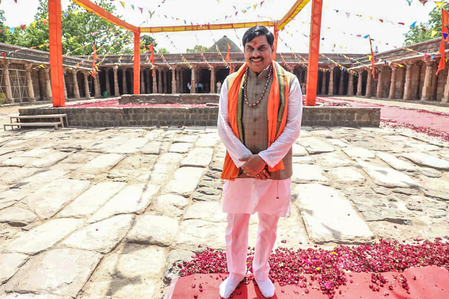
The meeting between Thakur and Shekhawat signals a fresh phase in the Bhojshala saga, a site steeped in religious significance for both Hindu and Muslim communities. Shekhawat expressed his intention to visit Dhar in June to assess proposals for transforming the site into a prominent religious and cultural tourism destination. Madhya Pradesh Chief Minister Mohan Yadav’s recent visit to Bhojshala on May 25 resulted in the announcement of two ambitious projects: the construction of a grand ‘Saraswati Lok’ temple corridor and the establishment of a Raja Bhoj Research Institute in Dhar.
Following a court ruling on May 15 that recognized Bhojshala as a temple dedicated to Vagdevi, the Archaeological Survey of India (ASI) revised its 2003 directive, permitting Hindus to offer daily prayers at the temple premises. Previously, the ASI had restricted Hindu worship to Tuesdays and Muslim prayers to Fridays within the Bhojshala-Kamal Maula Mosque complex, amidst ongoing disputes over ownership. The Muslim community has contested the High Court ruling, lodging appeals with the Supreme Court to challenge the decision. Security measures have been heightened at Bhojshala by local authorities to avert potential tensions between the two religious groups.
