


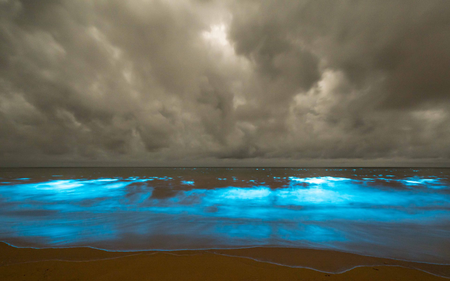
Scientists have identified a bioluminescent bloom along the southeast coast of Tasmania, Australia, characterized by red tides during the day and blue glows at night. This natural phenomenon, caused by Noctiluca scintillans, a bioluminescent marine plankton, is attributed to ocean warming driven by climate change rather than pollution from nearby salmon farms. Authorities have cautioned against swimming in affected areas due to potential skin irritation from ammonia emitted by the bloom, which can also deplete oxygen levels in the water, impacting marine life.
Marine biologist Lisa-ann Gershwin highlighted the ecological imbalance associated with the bloom, emphasizing the influence of warmer waters from the strengthening East Australian current, a consequence of climate change. Contrary to speculations, Emeritus Professor Gustaaf Hallegraeff clarified that the bloom’s nutrients originate from the deep sea, not from sources like land runoff or salmon farms. While the bloom does not require nutrients like ammonia and urea released by salmon farms, it has previously caused disruptions for these farms, such as deterring salmon from surfacing to feed in 2003.
Gershwin expressed concerns that conditions favoring Noctiluca could lead to harmful blooms similar to toxic algal outbreaks caused by other organisms. However, Hallegraeff reassured that Noctiluca scintillans blooms pose minimal risk of disrupting other organisms beyond their current range. The bloom’s presence serves as a stark reminder of the ecological impacts of climate change on marine ecosystems.
