


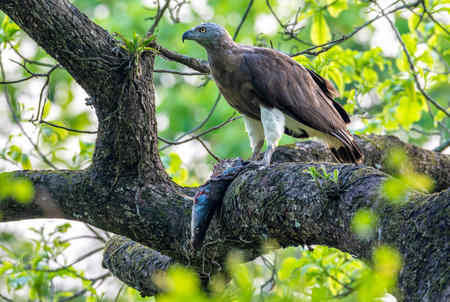
In a recent bird survey at Kaziranga National Park and Tiger Reserve in Assam, officials reported the sighting of 30 species of raptors with 217 individual birds and six species of storks with 266 individual birds. The survey, conducted in collaboration with research scholars, emphasized the park’s importance as a key habitat for various bird species, especially birds of prey and storks.
KNPTR Director Sonali Ghosh highlighted the significance of the survey, which was released on World Environment Day. The comprehensive study, carried out by a team of experts, identified nesting locations and recorded a diverse range of diurnal and nocturnal raptors, including eagles, falcons, vultures, buzzards, and owls. The park’s wetlands also support numerous resident and migratory stork species.
The survey revealed that Kaziranga National Park boasts a rich avian biodiversity, with 21 species of raptors and five species of storks. Biswanath Wildlife Division and Nagaon Wildlife Division also showed considerable diversity, underscoring the park’s role as a critical habitat for these birds. Among the recorded species, the Asian Openbill stork was the most abundant, while the Greater Adjutant stork was the rarest sighted.
Kaziranga’s landscape is particularly important for the globally threatened Pallas’s Fish Eagle, with the park hosting numerous breeding sites for the species. International collaboration has been crucial in monitoring and protecting these bird populations. The findings from the survey are expected to aid conservation efforts and further strengthen management strategies to safeguard these species.
