


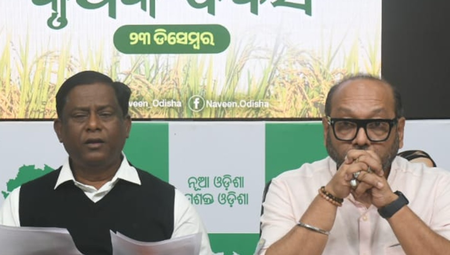
The Biju Janata Dal (BJD) has issued a warning of statewide protests if the Odisha government does not address the challenges faced by farmers regarding paddy procurement. Party leader Pramila Mallik expressed concerns about the difficulties farmers encounter due to the alleged collaboration between mill owners and the state administration, leading to dissatisfaction among farmers. She emphasized that the BJD is prepared to take to the streets to ensure justice for farmers.
At a press conference, BJD vice president Sanjay Kumar Das Burma criticized the BJP government for failing to deliver the promised benefits to farmers, despite claiming to provide an input subsidy of Rs 800 per quintal. He highlighted that only a fraction of the targeted paddy procurement was achieved in the 2024–25 fiscal year. Burma also pointed out the delay in procurement operations for the current kharif paddy season, with no activity reported in the designated mandis, causing distress among farmers.
The party raised concerns over conflicting statements from government officials regarding procurement limits, with discrepancies between the Food Supplies Minister and the Cooperation Minister’s declarations. Burma questioned the lack of coordination and transparency in the procurement process, citing various technologies like geo-tagging and grain analyzers allegedly being used to manipulate procurement quantities. The BJD leader emphasized the need for clarity and efficiency in the paddy procurement system to address farmers’ grievances.
In response to the ongoing paddy procurement issues, the Inter-Ministerial Committee, led by Deputy Chief Minister K.V. Singh Deo, has instructed officials to engage with farmers and promptly resolve any challenges encountered during the procurement process. The committee emphasized the importance of regular visits to mandis by departmental officers to oversee the procurement operations and ensure a smooth process. Currently, the state is in the midst of the Kharif 2025-26 paddy procurement, with data indicating the procurement of 4,39,294 metric tonnes of paddy from nearly 98,000 farmers through various mandis.
