


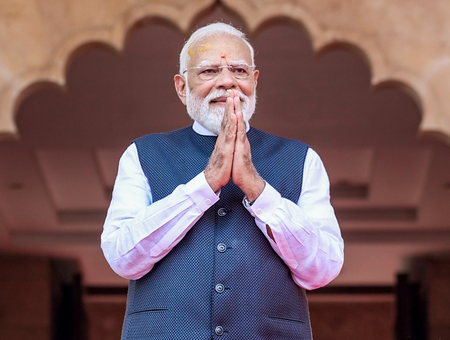
The Bharatiya Janata Party has seen a substantial increase in its MLA count from 773 in September 2013 to 1,798 in May 2026, as per Election Commission data. This growth, under Prime Minister Narendra Modi’s leadership, reflects consistent electoral advancements in various regions. The BJP has not only strengthened its traditional strongholds but also expanded into states where it previously had limited or no representation.
Key advancements are evident in states like Uttar Pradesh, where the party’s MLA count rose from 47 in 2013 to 257 in 2026. Similarly, in Madhya Pradesh, the tally increased from 143 to 165, and Gujarat saw a surge from 115 to 161, solidifying its influence in the Hindi heartland and western India. Maharashtra also witnessed a notable rise, with BJP’s numbers climbing from 46 to 131.
The BJP’s growth extends to the Northeast region as well. In Arunachal Pradesh, the MLA count escalated from three in 2013 to 46 in 2026, while Assam saw an increase from five to 82. The party has also expanded its presence in Manipur, Tripura, and Nagaland, emphasizing its strategic focus in the area.
In eastern India, a significant development is observed in West Bengal, where the BJP went from zero MLAs in 2013 to 199 in 2026, positioning itself for potential governance. Odisha also experienced a sharp rise, with BJP’s tally climbing from six to 79.
The BJP’s presence has strengthened in states like Haryana, Delhi, and Karnataka, with notable increases in MLA numbers. However, there have been minor declines or modest gains in states such as Bihar and Himachal Pradesh, indicating a mixed but predominantly upward trend.
Alongside its legislative expansion, the BJP’s executive influence is poised to grow further. With the recent victory in West Bengal, the party is expected to have Chief Ministers in 17 states. Additionally, five more states are governed by Chief Ministers from the National Democratic Alliance (NDA), bringing the total to 22 out of 31 states and Union Territories with legislatures.
The BJP’s widening footprint underscores a combination of organizational strength, strategic electoral planning, and leadership-focused campaigning that have facilitated its growth across diverse political landscapes.
