


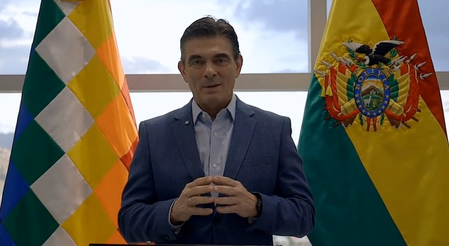
Bolivian President Rodrigo Paz Pereira has called for collaboration between future subnational authorities and the central government to tackle economic and institutional challenges. He emphasized this need after voting in Tarija, where elections are ongoing to select over 5,400 officials for the 2026-2031 term. Paz Pereira stressed the importance of working with the elected representatives to enhance democracy and civic engagement.
The president highlighted the necessity of unified efforts among the central government, regional leaders, and the legislature to advance a shared national recovery agenda. He also pointed out the advancements made by his administration in economic management, international relations, security, and anti-corruption measures. The ongoing elections involve more than 7.4 million eligible voters participating in over 33,000 polling stations nationwide.
Carlos Alberto Goitia, a member of the Supreme Electoral Tribunal (TSE), mentioned that around 250,000 personnel have been deployed across Bolivia to ensure transparency and security during the subnational elections. This massive deployment covers all nine departments and 340 municipalities, where various authorities will be elected for the upcoming term. Over 200,630 electoral jurors have been assigned to polling stations, along with additional temporary staff, police, military personnel, and prosecutors.
The electoral process features approximately 18,000 candidates vying for positions, underscoring its scale and complexity. To provide early voting trends, about 17,000 temporary workers are supporting the preliminary results transmission system. More than 32,000 police officers are on duty to safeguard the electoral process, with logistical support from the armed forces.
