


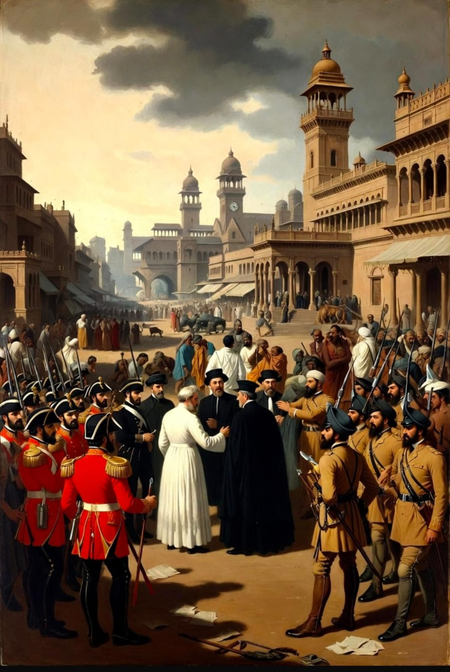
By the early 19th century, the British East India Company (EIC) transformed from a commercial entity to a debt-ridden empire ruling over millions. The Company’s governance relied not just on military might but also on moral influence and prejudice, leading to a delicate political balance.
As the EIC faced a crisis during the renewal of its exclusive Charter in 1814, various factions in Britain pushed for their interests, including open trade and religious societies seeking to evangelize in EIC territories. The Society in Scotland for Propagating Christian Knowledge (SSPCK) formally petitioned the House of Commons in 1813 to pursue their spiritual mission in India.
The SSPCK’s petition highlighted the condescending view of Indian natives as morally deficient and in need of civilization. While the missionaries aimed to spread Christianity, the EIC was grappling with financial bankruptcy, judicial dysfunction, and an informational lockdown, revealing the Company’s exploitative governance.
The EIC’s restrictions on missionary activities were driven by a fear of native resistance and a need to maintain political stability. The Company’s defensive stance aimed to prevent religious backlash and maintain control over the Indian population, showcasing a cynical use of religious tolerance for political ends.
The EIC’s control extended not only to Indian subjects but also to British employees, particularly Scottish Church members who were denied religious freedoms in India. The Company’s monopoly over entry and licensing showcased its total control over trade, publication, and even personal spiritual practices.
The missionary efforts in India, framed as civilizing missions, were intertwined with colonial goals of economic exploitation and cultural subjugation. Despite claims of spreading civilization, the British policies actively dismantled Indian industries and suppressed local agency, perpetuating a system of colonial control and oppression.
