


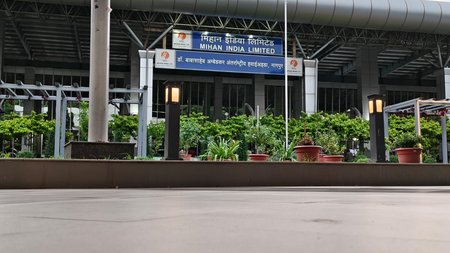
The Union Cabinet, led by Prime Minister Narendra Modi, has approved extending the lease period for land owned by the Airports Authority of India (AAI) and leased to MIHAN India Limited (MIL). This decision paves the way for the transfer and long-term development of Dr. Babasaheb Ambedkar International Airport under a public-private partnership model. MIL will license the Nagpur airport to GMR Nagpur International Airport Limited (GNIAL) for 30 years from the Commercial Operation Date (COD), a significant step for the Multi-modal International Cargo Hub and Airport at Nagpur (MIHAN) project.
The extension of the lease period beyond August 6, 2039, aligning it with the 30-year concession period granted to GNIAL, is aimed at facilitating a smooth handover of the airport to GNIAL. This move is expected to accelerate infrastructure development and modernization at the airport, enhancing its operational efficiency. MIL, established in 2009 as a joint venture between AAI and Maharashtra Airport Development Company (MADC), holds a 49:51 equity structure.
MIL had transferred airport assets in 2009 for operational purposes, but the execution of the lease deed faced delays due to land demarcation issues. Consequently, the land was initially leased only until August 6, 2039. In 2016, MIL initiated a global tender to find a private partner to operate the airport under a PPP model. GMR Airports emerged as the top bidder, offering a revenue share of 5.76%, later revised to 14.49% of gross revenue.
Following the annulment of the bidding process by MIL in March 2020, legal proceedings ensued, with GMR Airports challenging the decision. The Bombay High Court ruled in favor of GMR, a decision upheld by the Supreme Court in a judgment on September 27, 2024. Subsequently, MIL signed a concession agreement with GNIAL on October 8, 2024. The Cabinet’s recent approval is expected to usher in a new growth phase for Nagpur airport, blending private sector efficiency with government oversight. GNIAL aims to transform the airport into a world-class aviation hub, with plans for phased infrastructure expansion to increase passenger handling capacity to 30 million annually.
