


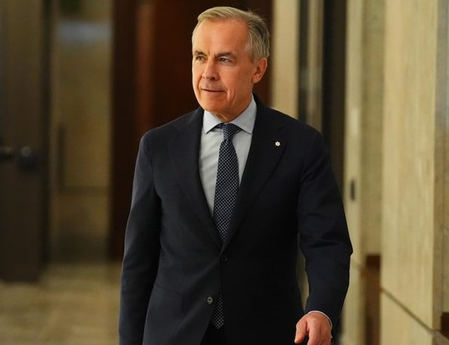
Canadian Prime Minister Mark Carney highlighted the need for global trade diversification as he expressed concerns over the shifting dynamics in Canada’s relationship with the United States. Carney emphasized the impact of increased US tariffs on Canadian industries such as automotive, steel, and lumber, comparing the current situation to the Great Depression era.
Since early 2025, the US has imposed significant tariffs on Canadian exports, including hefty duties on various goods and steel/aluminum. These tariffs have disrupted supply chains in North America, prompting Canada to explore new economic avenues. Carney revealed that Canada has inked 20 trade agreements across four continents in the past year, aiming to attract global investments and enhance clean energy capacity to mitigate external economic risks.
Carney stressed the importance of proactive strategies over reliance on past norms, stating, “Hope isn’t a plan and nostalgia is not a strategy.” He assured regular updates on Canada’s diversification efforts, acknowledging the time required for structural economic adjustments. The Prime Minister also addressed the impact of US tariffs on workers in the auto and steel sectors, noting a climate of uncertainty hindering business investments.
Many Canadians have expressed discontent over US President Trump’s remarks suggesting Canada’s potential annexation as the 51st State. Carney’s forward-looking approach underscores the necessity for Canada to adapt to evolving trade dynamics and reduce dependence on traditional US ties.
