


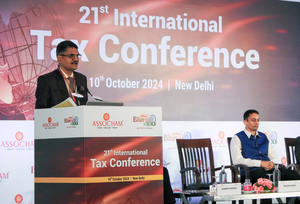
The Central Board of Direct Taxes (CBDT) Chairman, Ravi Agrawal, announced the upcoming release of new income tax forms, rules, and FAQs to assist taxpayers in transitioning to the new Income Tax Act, 2025, effective from April 1. Agrawal mentioned that these resources, including explanatory presentations and FAQs, aim to support taxpayers during the initial implementation phase from April to June. The CBDT plans to issue the new forms and rules in February for stakeholder feedback before the Act’s enforcement in 2026.
The direct tax proposals unveiled in the Union Budget 2026-27 are part of a broader initiative to simplify India’s tax structure, according to Agrawal. The reform process, initiated in July 2024 with a comprehensive review of the Income Tax Act, focused on enhancing readability and reducing ambiguity to minimize disputes. The recent Budget introduced structural changes to tax provisions to enhance clarity and streamline compliance ahead of the new Act’s rollout.
CBDT’s efforts to strengthen tax administration and improve taxpayer services have seen positive responses, with a significant number of individual taxpayers and businesses opting for the new tax regime. Notably, around 88% of individual taxpayers using ITR-1, ITR-2, ITR-3, and ITR-4 have embraced the new regime, along with a high migration rate among small businesses and professionals. Additionally, nearly 97% of taxpayers under presumptive taxation schemes have transitioned to the new system, indicating a favorable reception to the reforms.
To enhance the appeal of the new tax framework, the Budget proposed modifications to the Minimum Alternate Tax (MAT) provisions for companies. The proposal includes treating MAT as the final tax and reducing the rate to 14% from 15% under the previous regime. Furthermore, the Budget raised the Securities Transaction Tax (STT) on derivatives trading to deter excessive retail speculation in derivatives markets, with the actual impact expected to unfold gradually.
