


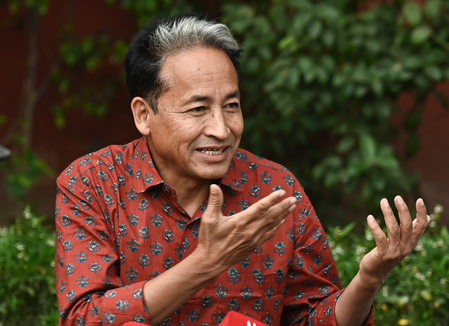
The Central government and Ladakh Apex Body (LAB) and Kargil Democratic Alliance (KDA) representatives have reached a significant understanding. This agreement aims to grant the Union Territory an elected chief minister with authority over bureaucracy, a legislative body, and protections under Article 371. Notably, climate activist Sonam Wangchuk participated in the discussions.
In a move seen as groundbreaking for Ladakh’s political empowerment, the Centre has proposed a UT-level Legislative body. This body would hold legislative, executive, and financial powers managed by elected representatives. Under this arrangement, all UT bureaucrats, including the Chief Secretary, will fall under the chief minister’s purview.
During a meeting in New Delhi, the Sub-Committee at the Union Ministry of Home Affairs finalized these decisions. The meeting included senior officials from the MHA, UT administration of Ladakh, and leaders from LAB and KDA. Chering Dorjay and Asgar Ali Karbalai, co-chairpersons of LAB and KDA, issued a joint statement affirming the in-principle agreement on critical points.
According to the joint statement, the proposed model would entrust legislative, executive, and financial powers to elected representatives through a UT-level legislative body. Additionally, Tashi Gyalson, a former Chairman-cum-CEC Leh Autonomous Hill Council, mentioned plans for seven district councils in Ladakh. The MHA recently increased the number of districts in Ladakh from two to seven.
