


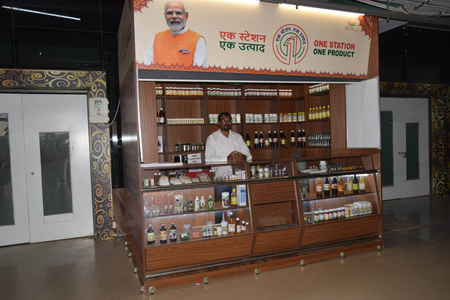
The Centre’s ‘One Station One Product’ (OSOP) initiative has now reached more than 2,000 railway stations, boasting around 2,326 outlets and benefiting over 1.32 lakh individuals nationwide. This initiative showcases a diverse range of products reflecting regional specialties, from Madhubani paintings in Patna to cane crafts in Tenkasi Junction, Tamil Nadu.
Similar regional trends are observed at various stations, where handloom products and artifacts are popular at Asansol in West Bengal, and cotton textiles and traditional attar perfumes are highlighted at Chennai’s Moore Market Complex station. In Odisha’s Balangir, locally made handcrafted toys by Self-Help Groups (SHGs) are providing a stable income for artisans, especially women.
The OSOP outlet in Jaipur is promoting Sanganeri print textiles, while at Tatanagar in Jharkhand, local handicrafts are gaining wider exposure through this initiative. The scheme emphasizes inclusivity by supporting artisans and groups with limited market access, aiding them in expanding their businesses and preserving traditional skills.
The initiative not only boosts commerce but also enhances the passenger experience by offering authentic local products as souvenirs, blending cultural immersion with everyday travel. With its increasing presence, the OSOP initiative is becoming a significant platform for advocating ‘Vocal for Local’ and bolstering grassroots entrepreneurship through India’s railway network.
Launched in the Union Budget 2022–23, the initiative aims to promote indigenous products by providing dedicated retail spaces at railway stations, facilitating local artisans, weavers, farmers, and Self-Help Groups (SHGs) to tap into a broader market. The scheme, initiated on March 25, 2022, following a pilot at 19 stations, has been progressively expanded, with stalls allocated on a rotational basis at nominal fees to ensure wider participation.
By October 2025, the Northeast Frontier Railway (NFR) had made significant strides under the initiative, with 112 stations under NFR’s jurisdiction hosting operational OSOP outlets, encompassing 135 functional units.
