


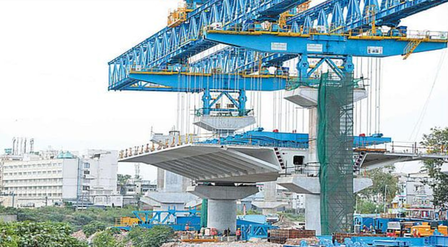
The construction of the Chennai Port-Maduravoyal Elevated Corridor in Tamil Nadu is advancing steadily, with almost 22% of the project completed. This Rs 5,600-crore initiative aims to enhance cargo movement between Chennai Port and the western suburbs, alleviating traffic congestion on crucial city roads. The 15.5-km elevated corridor, situated over the Cooum River, poses a significant challenge as one of the country’s most demanding urban highway projects.
Officials have announced a temporary halt in construction activities along the riverbanks during the northeast monsoon season from September to January due to safety concerns in heavy rain. The elevated expressway is on track to be finished by March 2029, offering a direct high-speed connection between Chennai Port and Maduravoyal. This development is anticipated to reduce travel time for container trucks and enhance freight transportation efficiency.
Furthermore, the project is set to ease traffic congestion on various arterial roads by redirecting heavy commercial vehicles to the elevated corridor. Meanwhile, the National Highways Authority of India (NHAI) is in the process of preparing a Detailed Project Report (DPR) for another significant infrastructure venture—an elevated road from Kalambakkam near Chengalpattu to Mahindra City.
Studies are also underway to integrate this proposed elevated road with the Chennai Metro Rail expansion project, aiming to enhance multimodal transport connectivity for commuters. The NHAI is additionally planning to expand the Chengalpattu-Tindivanam National Highway into a six-lane road this financial year, estimated at Rs 398 crore, to enhance traffic flow and accommodate the growing movement of passengers and commercial vehicles.
In a separate initiative, efforts to enhance safety on the Tindivanam-Puducherry National Highway will kick off soon with a Rs 147-crore project targeting seven identified accident-prone locations. These areas will undergo improvements through engineering measures and upgraded road infrastructure to enhance safety. Officials have clarified that toll plazas on national highways are typically spaced around 60 kilometers apart, with some exceptions to reduce the financial burden on motorists while ensuring effective operation and maintenance of the national highway network.
