


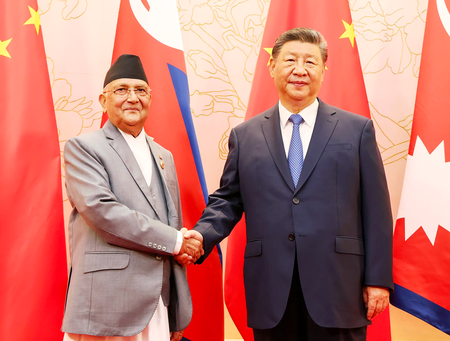
China has congratulated Nepal’s Rastriya Swatantra Party (RSP) for its significant win in the parliamentary elections held on March 5. The RSP, led by Rabi Lamichhane and Balen Shah, secured a dominating two-thirds majority in the House of Representatives, emerging as the largest political party. This victory marked a setback for Beijing as traditional parties like the Nepali Congress and Communist Party of Nepal faced substantial defeats.
The election results highlighted a notable defeat for communist forces in Nepal, which have historically held sway in the country’s politics. The leftist parties, ideologically aligned with Beijing, suffered a blow, raising concerns about potential shifts in Nepal’s foreign policy. Observers noted that the RSP’s victory might lead to increased US influence in the region, a development that could worry China.
Despite the defeat of communist forces, the Communist Party of China (CPC) extended warm congratulations to the RSP following the election outcome. The CPC expressed readiness to deepen political trust and enhance cooperation under the Belt and Road Initiative (BRI). The RSP’s leadership, under Lamichhane and Shah, was praised for fostering friendly ties with China and promoting bilateral collaboration.
China’s approach to working with ruling parties was evident in its message to the RSP, emphasizing continued friendly relations and cooperation. However, the decline of communist forces in Nepal, once considered Beijing’s ideological partners, signals a shift in the country’s political landscape. The RSP’s emergence as a democratic alternative has raised expectations for a balanced foreign policy benefiting from neighboring countries’ growth.
