


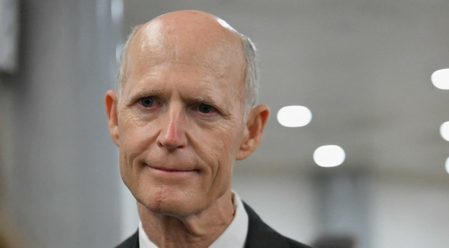
China-linked scam networks are siphoning off billions of dollars from hard-working Americans, posing a significant threat to families in the United States, according to influential senators. Senate Aging Committee Chairman Rick Scott emphasized the need for bipartisan legislation to combat fraud associated with cryptocurrency, human trafficking, and overseas scam operations. Scott highlighted that seniors are particularly vulnerable to these scams, resulting in the loss of savings accumulated over years and causing turmoil in households nationwide.
Scott accused Beijing of fostering the growth of criminal networks, labeling Communist China as the hub of a global scam industry that targets American savings and destabilizes families. He cited FBI data indicating that in 2024, older Americans fell victim to fraud amounting to over $4.8 billion, a figure he described as “staggering.” Many of the victims, particularly retirees, have had their lives disrupted by criminal networks operating abroad, Scott added.
The Senate committee’s report, Age of Fraud, reveals that these scams are not isolated incidents but rather well-organized, transnational enterprises. Scott pointed out that many of these operations are either directed or facilitated by the Chinese Communist Party, relying on Chinese platforms and payment channels. Additionally, scam compounds in Southeast Asian countries like Myanmar, Cambodia, and Laos are utilized, with trafficked workers being coerced into perpetrating scams targeting Americans.
Senator Kirsten Gillibrand, the Ranking Member, highlighted the increasing sophistication of scams, attributing this to the proliferation of scam centers, advancements in technology, and the use of cryptocurrency. She recounted a case in Jefferson County, New York, where a senior citizen was duped through a romance scam into transferring the majority of his retirement savings into cryptocurrency. Gillibrand emphasized the detrimental impact of such scams, which can derail retirement plans, fracture families, and subject seniors to emotional and financial harm.
Both senators advocated for legislative measures to prompt a unified federal response to combat these fraudulent activities. Scott, Gillibrand, and other senators introduced the National Strategy for Combating Scams Act, aimed at fostering a comprehensive government approach to tackling fraud. Scott also highlighted the SCAM Act, which recently passed the Senate, granting the Treasury Department the authority to sanction scam compounds and the criminal networks behind them. The senators are also championing the GUARD Act, which seeks to enhance penalties for those targeting older Americans and broaden law enforcement tools, with Scott underscoring the bipartisan and pragmatic nature of these bills.
