


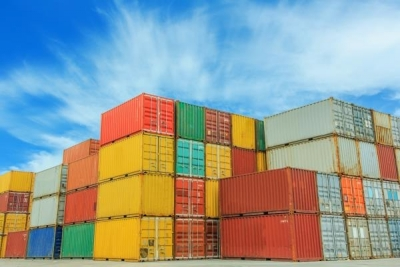
New Delhi, Aug 11 (IANS) China’s weak domestic demand and excess industrial capacity forces the country’s government to subsidised exports in order to spur economic growth, but this is causing problems in the world economy as cheap Chinese goods are being dumped in other countries where the local industries get hit, according to a new report.
China’s economy is structurally weaker than it appears and overly dependent on government-subsidised exports, according to the report in The Washington Post.
On the surface, China is on track for another year with a trade surplus topping $1 trillion. Exports surged last month by 24 percent year-over-year, according to recent data.
But the domestic economy is showing prolonged weakness. China’s growth dropped to 4.3 per cent in the second quarter of 2026, the lowest in three years. Home prices have slumped, and developers and local governments are reeling under piles of debt. Youth unemployment has remained stubbornly around 15 per cent, the report states.
It highlights that China’s electric vehicle manufacturers, steel companies and other industries get cheap loans, tax breaks, free or inexpensive land at government-run industrial parks, and sometimes direct grants which serves as a subsidy.
From 2005 to 2024, Chinese firms across 15 sectors received three to eight times more government support than firms in other major economies, according to the Organization for Economic Cooperation and Development (OECD).
The slowdown in the China’s economy is reflected in the decline in retail sales during May and a fall in investment in factories by 4.1 per cent from January to May.
The report also points out that while China’s leadership is talking about boosting domestic demand, this is not easy to achieve as the Chinese people do not have a safety net and have to rely heavily on their own savings.
Since the economy is going through a slowdown and the unemployment rate has risen there is a further need to cut expenditure on consumer goods and increase savings to meet the cost of essentials for survival or any unforeseen contingency.
“China’s leaders have been talking for decades about the need to restructure the economy to decrease reliance on exports and juice consumer spending. In 2007, then-Prime Minister Wen Jiabao described China’s economic development as “unsteady, unbalanced, uncoordinated and unsustainable.” But little has changed in the subsequent two decades,” the report points out.
Despite their public stand to increase domestic expenditure, China’s leaders may not actually want to shift toward a consumer-centric economy. The main obstacle is political. Ordinary Chinese save so much because government-backed pensions, health insurance, education funds and basic incomes are woefully inadequate, the report added.
–IANS
sps/na
