


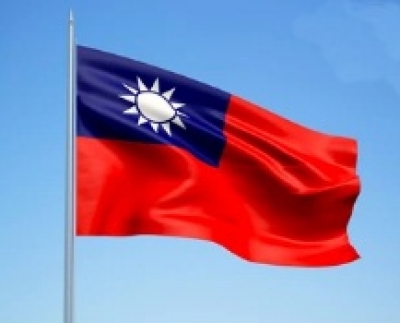
China’s approach towards Taiwan reflects concerns beyond territorial disputes, encompassing historical narrative, domestic comparisons, diplomatic influence, and strategic containment. Taiwan’s governance model stands in stark contrast to the Chinese Communist Party, challenging the notion that Chinese identity necessitates authoritarian rule. The European Times featured an article by Khedroob Thondup, the Dalai Lama’s nephew, emphasizing that Beijing perceives Taiwan not just as a sovereignty issue but as an existential ideological threat to the CCP.
Thondup highlighted that China’s fixation on Taiwan is rooted in fears related to regime survival rather than mere territorial claims. The CCP views Taiwan’s independence and assertion of autonomy as direct challenges to its domestic legitimacy and global ambitions. Despite Beijing’s insistence on Taiwan’s historical ties to China under the ‘One China’ principle, the actual status of Taiwan post-World War II remains politically and legally disputed, exposing the fragility of the CCP’s historical narrative.
Taiwan’s democratic identity poses a significant challenge to Beijing’s narrative of sole Chinese sovereignty and civilization inheritance. The island’s democratic, pluralistic, and prosperous society showcases an alternative Chinese-speaking community thriving without Communist Party rule. Xi Jinping’s leadership, tied to the concept of ‘national rejuvenation’ through reunification, faces a credibility crisis if Taiwan remains beyond Beijing’s control. The report underscores that Taiwan’s international engagements chip away at Beijing’s diplomatic standing, emphasizing the island’s de facto independence and democratic governance.
Taiwan’s strategic importance extends beyond symbolic significance, playing a crucial role in the military balance in the Indo-Pacific region. Anchoring the first island chain from Japan to the Philippines, Taiwan’s security coordination with the US and regional partners constrains China’s naval expansion into the wider Pacific. Beijing perceives Taiwan not just as a symbol but as a strategic barrier with implications for its broader geopolitical ambitions.
