


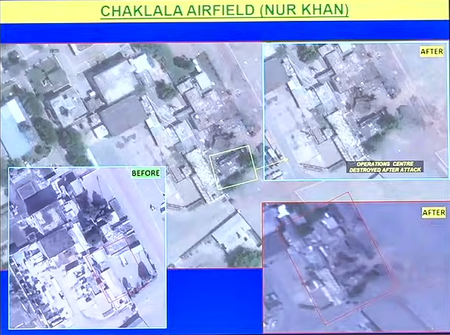
A Chinese AI firm has disclosed intelligence tracking details of Pakistani military installations and naval assets to the public. The report highlighted the release as a significant breach of operational security, emphasizing its deliberate nature. MizarVision, the Chinese company, utilized high-definition satellite imagery to document developments at Pakistan Air Force Nur Khan base and a Pakistan Navy task group in a Sri Lankan port.
The satellite imagery captured upgrades at PAF’s Nur Khan base, including the construction of a reinforced concrete hangar for fighter aircraft. The report specifically mentioned the presence of Chinese-supplied JF-17 Block III and J-10C fighters at the site. Additionally, the assessment described the new structure as a defensive measure against potential threats, particularly in response to recent attacks.
Furthermore, recent material from June 5 revealed imagery of a Pakistan Navy task group at a Sri Lankan port, exposing a Pakistani Agosta-90B submarine and escort frigates. The software used by MizarVision automatically identified and tagged the vessels, compromising the submarine’s stealth capabilities while outside Pakistani waters. The report highlighted the competitive nature within China’s military-industrial sector as a possible reason for the disclosure, despite China’s typically controlled information environment.
The disclosure of sensitive defense assets by a Chinese entity to the public sends a message of strategic vulnerability and technological reliance to Pakistan. By publicly revealing the locations of Pakistan’s defense assets, including attack submarines, China indirectly signals Islamabad’s limited operational privacy. This revelation raises questions about the dynamics of the China-Pakistan relationship and the implications of such disclosures on regional security.
