


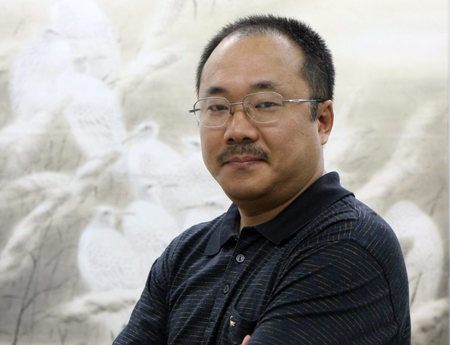
Dong Yifu, the son of imprisoned Chinese journalist Dong YuYu, has called on the US, UK, and Europe to increase diplomatic efforts to secure his father’s freedom. Dong Yifu emphasized that his father’s conviction establishes a concerning precedent. The Beijing High Court recently rejected an appeal to overturn Dong YuYu’s prison sentence, a move criticized by his family as an act of persecution.
The case against Dong YuYu began when he was having a routine lunch with a Japanese diplomat in Beijing in 2022. Despite the meeting being part of his journalistic work on foreign affairs, police officers intervened and took him for questioning. Subsequently, Dong YuYu was arrested on spying charges and later sentenced to seven years in prison. The dismissal of the appeal by the Beijing High Court has raised international concerns over China’s tightening control on media freedom.
Dong Yifu expressed disbelief at the situation, stating that the entire ordeal is absurd. He highlighted the diminishing space for independent expression under President Xi’s rule over the past decade. Dong Yifu emphasized that even mild calls for reform are now being suppressed, silencing moderate voices advocating for change. Concerns have been raised about Dong YuYu’s well-being in detention, particularly regarding his health and nutrition due to poor living conditions.
Criticism has mounted against the Beijing High Court’s decision from human rights and press freedom organizations. They argue that the verdict further restricts freedom of expression in a country where numerous journalists have already been imprisoned under President Xi’s leadership. Beh Lih Yi, the Asia-Pacific Director of the Committee to Protect Journalists (CPJ), emphasized that engaging with diplomats is a standard practice for journalists and not espionage. She urged China to release Dong YuYu immediately to demonstrate a commitment to open engagement.
Dong YuYu, who previously held a senior position at Guangming Daily, a comparatively liberal newspaper within the Communist Party’s media landscape, has a history of advocating for constitutional democracy and political reform. His arrest and conviction have drawn attention to the shrinking space for dissenting voices in China’s media environment.
