


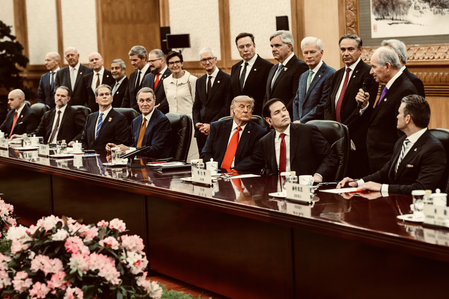
US Secretary of State Marco Rubio, previously sanctioned by Beijing for criticizing China, played a significant role at President Donald Trump’s recent summit with Chinese President Xi Jinping. Despite facing sanctions from China in 2020, Rubio was part of the American delegation during the two-day summit in Beijing. Chinese state media and official records altered the transliterated Chinese character for Rubio’s surname after he became secretary of state in 2025, allowing him to attend the summit.
Experts mentioned in a report by The Washington Post suggested that this name change might have provided a way for Beijing to allow Rubio’s participation without officially lifting the sanctions. By using a different Chinese spelling for Rubio, Chinese officials could navigate the situation diplomatically. Beijing differentiated between Rubio’s previous position as a senator and his current role as America’s top diplomat, stating that the sanctions were directed at his actions during his time as a senator.
Rubio, a vocal critic of China’s policies, especially regarding Hong Kong and Xinjiang, has been a prominent figure in Washington’s criticism of China. Despite his past confrontations with Beijing, Rubio was actively involved in Trump’s diplomatic engagements with China during the summit. He, along with other key officials, engaged in discussions with Xi at the Great Hall of the People and accompanied Trump to the Zhongnanhai leadership compound.
During interviews surrounding the summit, Rubio notably adopted a more balanced stance on China, emphasizing the country’s significance as both a political challenge and a crucial relationship for the US to manage. The summit primarily focused on trade, Taiwan, and Iran, with Chinese President Xi Jinping cautioning Trump about the potential consequences of mishandling the Taiwan issue, as reported by Chinese sources. The episode involving Rubio underscores the pragmatic adjustments made by both sides as they seek to stabilize relations amidst longstanding tensions over various issues.
