


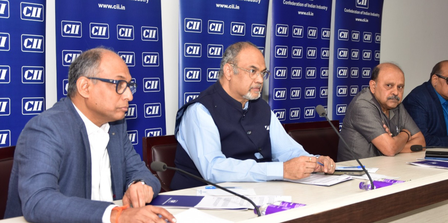
The Confederation of Indian Industry (CII) Gujarat commended the Union Budget 2026 for its emphasis on accelerating economic growth and enhancing manufacturing competitiveness. Industry leaders at a live budget viewing session in Gandhinagar highlighted the budget’s focus on immediate economic stimulus and long-term capacity building. The budget, guided by the theme of ‘Sankalp,’ aims to boost economic growth, aspirations, and equitable access.
Premraj Keshyep, Chairman of CII Gujarat State Council, lauded the substantial increase in public capital expenditure to Rs 12.2 lakh crore, foreseeing a positive impact on infrastructure and heavy industries. He mentioned that the budget’s initiatives on capital goods and infrastructure equipment would reduce import dependence. Additionally, the proposed development of high-speed rail corridors, including the Mumbai-Pune route, is expected to enhance industrial connectivity.
Achal Bakeri, Vice Chairman of CII Gujarat State Council, appreciated the budget’s urbanization measures, particularly the City Economic Regions initiative with an allocation of Rs 5,000 crore per region. This initiative recognizes cities as growth engines and aims to unlock urban agglomerations’ economic potential. The reduction in tariff rates on imported goods for personal use and customs duties rationalization were also noted as measures to support ease of living and stimulate consumer demand.
Vinod Agrawal, Convenor of CII Gujarat Panel for Policy Advocacy, highlighted the benefits Gujarat would receive from the proposed support for establishing three dedicated chemical parks. He emphasized the significance of initiatives like India Semiconductor Mission 2.0 and the Biopharma SHAKTI program in strengthening domestic manufacturing and global supply chain participation. Tax and compliance reforms, including the proposed new Income Tax Act 2025, were also discussed during the session, signaling a move towards a simplified tax framework.
Industry representatives welcomed the budget’s support for MSMEs, startups, and manufacturing clusters, including the proposed Rs 10,000 crore SME Growth Fund. They appreciated the focus on reviving legacy industrial clusters, investment in carbon capture technologies, and measures to ease courier exports. Overall, the budget was seen as a positive step towards enhancing productivity and competitiveness across various sectors.
