


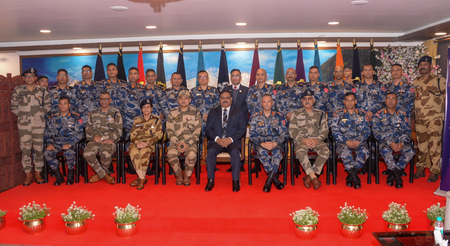
The Central Industrial Security Force (CISF) in New Delhi recently organized a study and interaction program for 19 officers from the Nepal Armed Police Force (APF). The aim was to enhance professional cooperation and strengthen bilateral ties between the two neighboring countries. The visiting delegation, consisting of officers undergoing training in Nepal, is on a 10-day study tour in India as part of their training program.
The Nepal APF, the sole paramilitary force of Nepal, is responsible for internal security, VIP protection, and safeguarding vital installations. The interaction program, chaired by Vijay Prakash, IPS, Additional Director General (Headquarters) of CISF, took place at the CISF Headquarters conference hall. Vinay Kajla, Deputy Inspector General (Training), briefed the officers on CISF’s mandate, role, and operational framework during the opening address.
The officers received a detailed presentation on CISF’s operational deployment, administrative structure, and welfare initiatives for its personnel. They were also briefed on the force’s readiness to address emerging security threats, with a particular emphasis on drone-related challenges. CISF officials highlighted initiatives like the establishment of Drone Training Schools in Hyderabad and Bhilai.
During an interactive session, the Nepal APF officers sought clarification on CISF’s posting policies, internal procedures, and security consultancy services. Senior CISF officers explained that the force offers consultancy support to various institutions to enhance security mechanisms at vital installations. Shambhu Subedi, Deputy Inspector General of the Nepal Armed Police Force, expressed gratitude for the hospitality and professional insights provided by the Indian government and CISF in his closing remarks.
The program concluded with the presentation of a memento to the visiting officers, followed by a field visit to the Delhi Metro Rail Corporation. This initiative, conducted under the guidance of the Bureau of Police Research and Development (BPR&D), aims to deepen institutional cooperation between the two forces.
