


The Central Marine Fisheries Research Institute (CMFRI) has commenced a two-year, Rs 4.986 crore research project to investigate fishery resources associated with seamount ecosystems in the Arabian Sea, focusing on cephalopods. Supported by the Ministry of Earth Sciences, the initiative aims to study the diversity, distribution, ecology, and biology of squid, cuttlefish, and octopus populations in seamount regions of the eastern Arabian Sea. This project is in line with Vertical-3 of the Deep Ocean Mission, emphasizing the government’s interest in advancing scientific and economic knowledge of marine resources.
A significant outcome of this endeavor will be the creation of Artificial Intelligence-based tools for automated species identification. These tools are anticipated to improve taxonomic accuracy, decrease manual classification time, and facilitate the scalable monitoring of deep-sea biodiversity, a domain that remains largely unexplored in Indian waters. The research is a collaborative effort between CMFRI’s Kochi headquarters, its Mangaluru Regional Centre, and the National Institute of Technology, Surathkal.
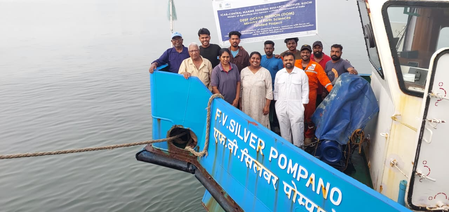
The initial exploratory survey has been finished, focusing on specific seamounts in the southeastern Arabian Sea. Field operations were conducted on CMFRI’s research vessel F.V. Silver Pompano, with senior scientists leading the way, along with parallel sampling missions from Azheekal Fishing Harbour in Kollam. The surveys concentrated on mapping cephalopod communities and evaluating their relationship with seamount habitats.
The findings from this project are expected to offer crucial insights into the dynamics of deep-sea ecosystems and guide sustainable exploitation strategies. Given the increasing global interest in seamounts as biodiversity hotspots supporting dense populations of various species, the CMFRI-led research could have a significant impact on India’s future deep-sea fisheries and conservation policies.
