


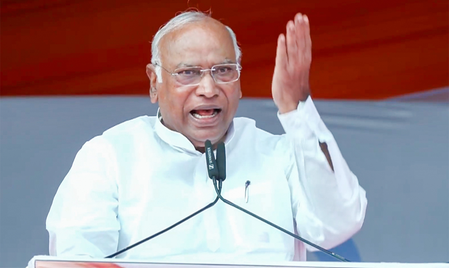
Hailing the diplomatic skills of past Prime Ministers Nehru, Gandhi, and Vajpayee, the Congress criticized the current Modi government for allegedly compromising India’s diplomatic autonomy. Congress President Mallikarjun Kharge accused PM Modi of yielding to external pressures, risking national sovereignty. Kharge highlighted instances like the US granting a waiver for Indian oil purchases from Russia, suggesting a loss of diplomatic ground.
Praising the diplomatic legacy of previous administrations, Kharge emphasized India’s historical independence in decision-making. He contrasted this with what he perceives as PM Modi’s compliance with foreign demands, particularly in trade and oil sectors. Kharge’s remarks underscore a broader concern within the Congress party regarding the government’s foreign policy approach.
The Congress President pointed to specific incidents, such as the US dictating terms on oil purchases and trade agreements, as evidence of what he views as a weakening diplomatic stance. Kharge’s critique extends to the government’s response to international conflicts, questioning its silence on critical events like the attack on the Iranian frigate IRIS Dena. These criticisms reflect a broader sentiment within the opposition party regarding India’s diplomatic trajectory.
Former Union Minister Jairam Ramesh also joined the chorus of criticism, highlighting concerns over the government’s foreign policy effectiveness. Ramesh’s comments come amidst escalating tensions in West Asia, urging the Indian government to play a more proactive role in global affairs. The Congress party’s scrutiny of the government’s diplomatic decisions signals a growing scrutiny of India’s foreign relations strategy.
