


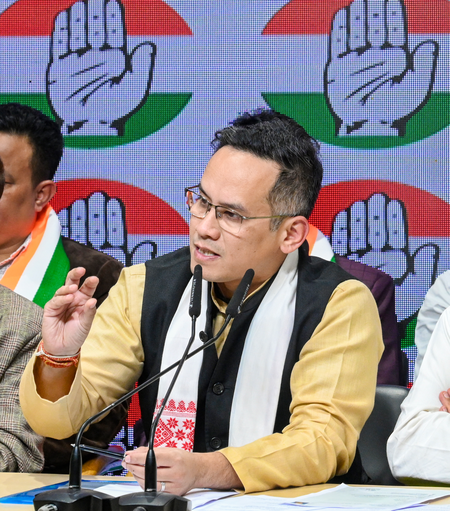
Congress MP Gaurav Gogoi, Deputy Leader of the Lok Sabha, expressed worry to Union Home Minister Amit Shah about the frequent racial harassment and assaults on individuals from the Northeast in Delhi. Gogoi emphasized the need for immediate actions to enhance safety mechanisms for this group. He highlighted a recent incident at Nehru Place where two women from Assam and Bihar were reportedly molested, assaulted, and subjected to racial abuse by a group of men on May 10.
Gogoi’s letter mentioned that the women, while having tea outside a hotel, were subjected to catcalling and derogatory racial comments that escalated into a physical attack. The Delhi Police confirmed that the women were targeted based on their race and assaulted. Gogoi also referenced other recent cases involving Northeast residents in Delhi, including the racial abuse and assault of a lawyer from Manipur and her transwoman friend in South Delhi in March, as well as an incident in February involving three women from Arunachal Pradesh in Malviya Nagar.
The Congress leader pointed out that these incidents were not isolated but indicated a troubling trend of bias, profiling, and violence against Northeasterners in Delhi. He recalled past tragedies like the killing of Nido Tania in 2014 and the death of Tripura student Anjel Chakma after an assault in 2025. Despite the presence of initiatives like SPUNER, Helpline 1093, the North East Assistance Team (NEAT), and awareness programs by the Ministry of Home Affairs and Delhi Police, Gogoi highlighted significant gaps in implementation and institutional trust.
Gogoi stressed the importance of Delhi embodying values of equality, dignity, and security for all citizens, regardless of their region, ethnicity, language, or appearance. He emphasized the contributions of individuals from the Northeast to Delhi’s social, educational, and economic fabric, asserting that they not only deserve legal protection but also trust in the safeguarding institutions. The letter urged the Union Home Minister to assess the efficacy of existing support systems, enhance accountability in racial harassment cases, raise awareness about helplines and legal protections, and ensure prompt and decisive action in such incidents.
