


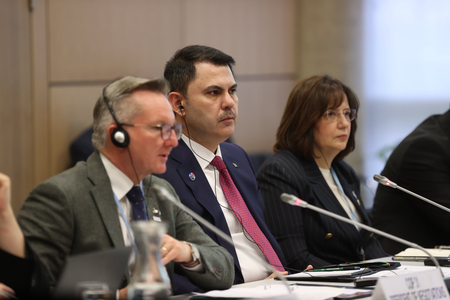
At the UN June Climate meetings in Bonn, Germany, COP31 President-Designate Murat Kurum unveiled a new global electrification target as a key initiative of the COP31 Presidency’s Action Agenda. The goal aims to accelerate the transition from direct fossil fuel usage to clean electricity in buildings, transport, and industry. Kurum proposed increasing the share of final energy demand met by electricity from just over 20% to 35% by 2035, aligning with efforts to limit global warming.
The electrification target, introduced during the Bonn Climate Change Conference, is supported by analysis from the International Energy Agency (IEA) and the International Renewable Energy Agency (IRENA). It is intended to aid the implementation of the Paris Agreement and contribute to keeping global warming below 1.5 degrees C above pre-industrial levels. Additionally, Kurum announced other goals, including halving global waste growth by 2035, with a focus on reducing food waste that contributes significantly to global emissions.
As part of COP31’s initiatives, a new global target was set to decrease energy consumption intensity in the building sector by at least 25% by 2035. This target is crucial for mitigating rising energy costs and enhancing the resilience of families and businesses. The COP31 Presidency is also developing further initiatives related to food security, circular materials in manufacturing, and climate education, aiming to strengthen the connection between national climate priorities and economic development.
In collaboration with Australia, the COP31 Presidency has tasked the IEA to produce special reports outlining pathways to achieve the electrification target and analyzing the benefits of waste reduction and improved waste management systems. This initiative builds on existing efforts with IRENA to promote electrification as a means to transition away from fossil fuels.
