


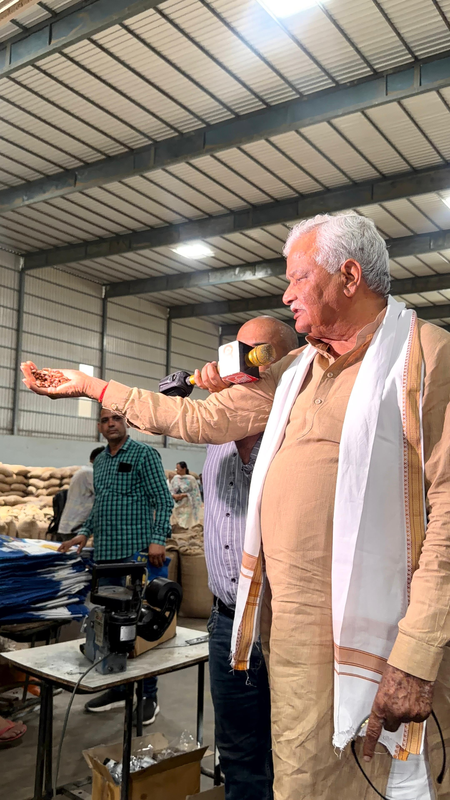
Agriculture Minister Kirodi Lal Meena led a surprise crackdown on the seed mafia in Rajasthan, targeting illegal factories in the RIICO Industrial Area, Chomu, near Jaipur. The minister uncovered two unauthorized units allegedly involved in a large-scale counterfeit groundnut seed operation. These factories were accused of repackaging substandard seeds under fake branding, misusing the name of a reputed company based in Sikar.
Officials revealed that the illegal units were packaging low-quality groundnuts as certified high-yield seed varieties, including well-known strains like RG-510, SG-551, and RG-578 developed by agricultural research institutions. During the raid, a significant amount of material was seized, including millions of empty sacks and packaging bags bearing labels of known seed companies, along with a large quantity of raw groundnuts procured at low prices from the open market.
The inspection also uncovered industrial machinery used for shelling peanuts and packaging them into branded seed bags, indicating a sophisticated counterfeit production system operating at a considerable scale. The entire facility was promptly sealed by officials, with police support deployed to secure the site.
Experts examining the seized material found that the groundnuts were contaminated with aflatoxin, a toxic fungus known for its severe health risks. The presence of this fungus rendered the seized stock unsuitable for agricultural use or human consumption, posing significant public health concerns. If these contaminated seeds were to be used for cultivation, the risk of crop failure would be substantial, with potential long-term health hazards for consumers, including liver damage and cancer.
The Agriculture Minister expressed concern over the damage caused by such illegal activities to farmers’ trust in certified seed varieties and Rajasthan’s agricultural reputation in global markets. He highlighted that the state’s groundnut exports, once robust, had faced quality and contamination issues, leading to export restrictions in recent years. Authorities emphasized that the counterfeit seed racket not only defrauded farmers by selling fake seeds at inflated prices but also posed risks to soil health, crop productivity, and export credibility.
Ongoing investigations by agriculture department officials and police aim to uncover the extent of the network and trace the supply chains associated with these illicit operations. The state government has pledged to take stringent action against all individuals involved in the counterfeit seed trade.
