
Close Menu
  • Indian Festivals 2026
  • Movie & OTT Releases This Week
  • Entertainment
  • NRI Life
  • Research
  • Advertise with us
Facebook X (Twitter) Instagram YouTube
  • Download Indian Community App
  • Advertise Here
Facebook X (Twitter) Instagram
Indian CommunityIndian Community
Trending
  • The Last Salute Movie Review 2026: An Unmissable Tribute That Soars With Raw MiG-21 Stories
  • Hi Movie Review 2026: Kavin-Nayanthara’s Delightful Rom-Com Is a Refreshing Watch
  • Once More (2026) Movie Review: Arjun Das and Aditi Shankar’s Heartfelt Tamil Romance Is A Beautiful Second-Chance Love Story
  • Babita Singh Reporting Review 2026: A Powerful, Unforgettable Journey Into Courage and Truth
  • Toxic: A Fairy Tale For Grown-Ups 2026 Movie Review— Yash Delivers A Stunning Gangster Spectacle
  • Bindi, Tilak, or Sindoor: Here’s What That Dot on the Forehead Actually Means
  • Bethlehem Kudumba Unit Movie Review 2026: A Heartwarming Onam Blockbuster That Wins Hearts
  • Irumudi Movie Review 2026: Ravi Teja Delivers a Powerful Comeback Performance in Shiva Nirvana’s Emotional Thriller
  • Indian Festivals 2026
  • Entertainment
  • Latest Movie Releases
    • Latest OTT Releases
  • NRI Life
  • India & Culture
  • Health & Wellness
  • Research
Indian CommunityIndian Community
Home » News » International
International

Critics Warn of Risks in Militarised Governance in Pakistan’s Balochistan

Indian Community Editorial TeamBy Indian Community Editorial TeamFebruary 13, 20262 Mins ReadNo Comments Add us to Google Preferred Sources
Critics Warn of Risks in Militarised Governance in Pakistan’s Balochistan
Share
Facebook Twitter LinkedIn Pinterest Email

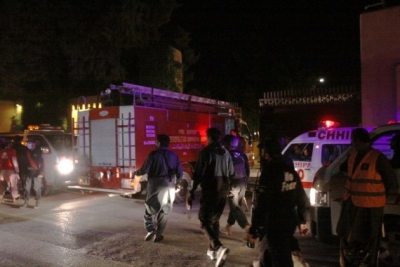
Critics caution that the ongoing militarised governance in Pakistan’s Balochistan could worsen alienation and instability in the region. Recent attacks in Balochistan are not only undermining Pakistan’s security narrative but also posing a threat to international investment commitments, particularly those involving the US and China, as reported by Kenya-based Capital News. The Balochistan region, known for its abundant minerals and strategic location along the Arabian Sea, has experienced a series of coordinated assaults by the Baloch Liberation Army (BLA), resulting in casualties among civilians, security forces, and insurgents. This violence has exposed the vulnerability of Balochistan, which has been predominantly governed through security measures rather than political dialogue.

Balochistan’s conflict traces back to 1948 when it became part of Pakistan, with Baloch leaders consistently raising concerns about political marginalisation, lack of control over resources, and limited economic opportunities. Responding to these issues, successive governments have resorted to heavy military presence and security operations in the region. The situation has gained greater geopolitical significance in recent years due to the China–Pakistan Economic Corridor (CPEC). The development of Gwadar Port, highways, and energy infrastructure in Balochistan is crucial for China’s regional trade strategy and Pakistan’s economic revival plans. Simultaneously, Pakistan aims to attract Western investments in Balochistan’s mineral reserves, including copper, gold, and gas. However, persistent insecurity has cast doubts on the sustainability of long-term investments in the area.

Pakistan’s military leadership, led by Army Chief General Asim Munir, argues that security operations are essential to combat separatism and uphold national unity. Nevertheless, there are concerns among some observers regarding the accuracy of casualty figures and the extent of unrest, raising questions about transparency in crisis management. Human rights organizations have expressed worries over alleged media blackouts and restrictions on peaceful demonstrations, particularly by families seeking information about missing individuals. The repercussions of the conflict extend beyond Pakistan’s borders due to Balochistan’s strategic significance, bordering Iran and Afghanistan and serving as a gateway to vital maritime routes. Any instability in Balochistan could impact regional trade networks and broader geopolitical dynamics.

Afghanistan Asim Munir Baloch Liberation Army (BLA) Balochistan China CPEC Gwadar Port Human rights groups Iran Pakistan US
Add us to Google Preferred Sources
Indian Community Editorial Team

The Indian Community Editorial Team curates, verifies, and publishes stories that matter to Indians worldwide. From culture and community to business and innovation, our mission is to spotlight voices, ideas, and events that bring our global community closer together. Have news or a story to share? Submit it to us at [email protected].

Related Posts

Student Visas : Why Studying in the US, UK, Canada and Australia Is Getting Harder for Indians

H-1B Visa Interview Appointments for Indians Pushed to 2027: What You Need to Know Now

Indian H-4 Spouses Challenge End of Automatic Work Permit Extensions in US

Add A Comment

Piyush Soni: The Chokra Singer’s Journey Back to Music

August 24, 2026

Formula 1: Max Verstappen pens contract extension with Red Bull till 2030

August 20, 2026

Prakash Raj to play revered carnatic music maestro in ‘Jagamae Sangeetham’

August 20, 2026

Three in four occupiers plan to expand their office portfolios in India over next two years

August 20, 2026
  • Facebook
  • Twitter
  • Pinterest
  • Instagram
About Us
  • About Us
  • Contact Us
  • Terms of Service
Corporate
  • Download Indian Community App
  • Advertise Here
Facebook X (Twitter) Instagram
  • About Us
  • Contact Us
  • Terms of Service
© 2026 Designed by CreativeMerchants.

Type above and press Enter to search. Press Esc to cancel.